
 by
by 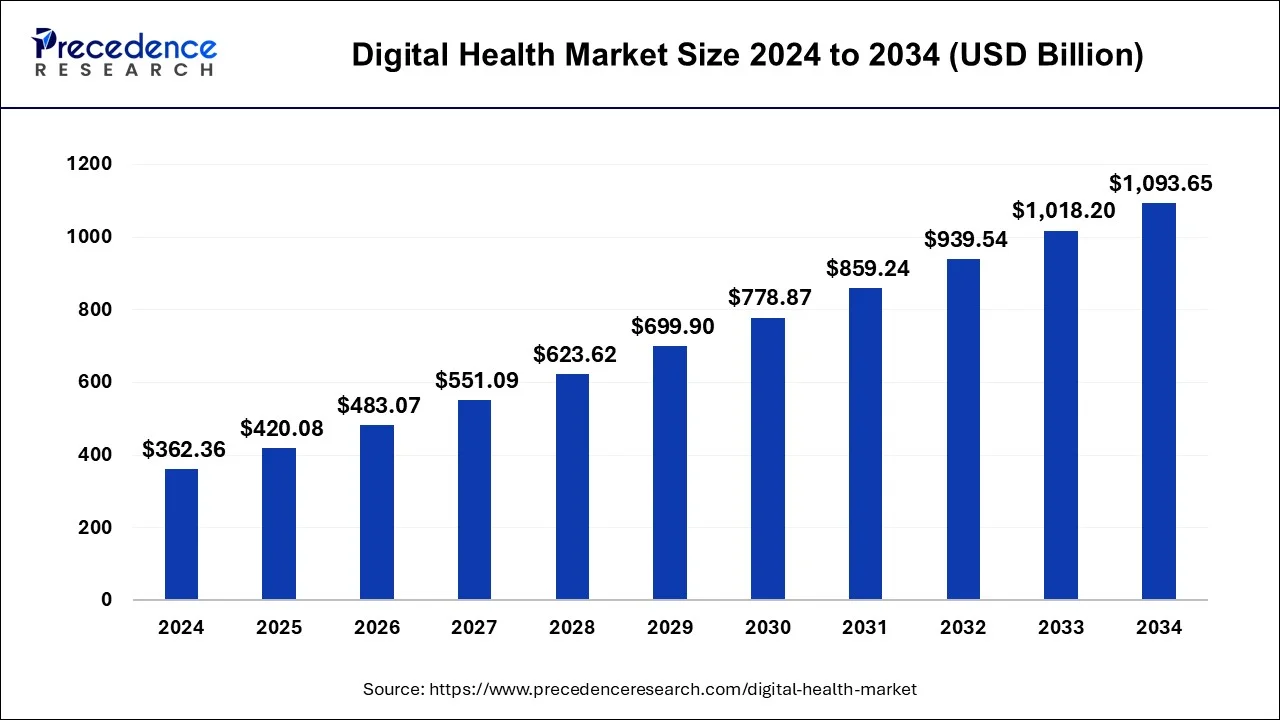
Digital Health Market Key Takeaways
- Europe has generated a revenue share of around 34.67% in 2024.
- By component, services segment contributed the highest market share of 65.67% in 2024.
- By technology, telehealthcare captured the biggest market share of 41.01% in 2024
Market Overview
The digital health market encompasses a broad range of technologies and solutions aimed at improving healthcare delivery, enhancing patient outcomes, and streamlining clinical workflows. This includes telemedicine platforms, mobile health applications, wearable devices, digital therapeutics, electronic health records, and AI-driven diagnostic tools. The market is experiencing strong momentum due to increasing demand for remote care, personalized treatment, and data-driven decision-making in healthcare. The growing burden of chronic diseases, aging populations, and the need for cost-effective healthcare services are driving the adoption of digital health solutions across the globe.
Telehealth, in particular, has emerged as a vital component of the digital health ecosystem, enabling patients to access care remotely and providers to extend services beyond traditional settings. Mobile health applications and wearable technologies are empowering consumers to actively manage their health, while healthcare providers leverage analytics and AI to improve diagnosis, treatment planning, and operational efficiency. The market is further supported by favorable government initiatives, rising investments in healthcare IT infrastructure, and the integration of advanced technologies like the Internet of Things and cloud computing.
As the healthcare industry shifts toward value-based care, digital health is playing a crucial role in improving quality, reducing costs, and expanding access to care. The COVID-19 pandemic significantly accelerated the adoption of virtual care models, highlighting the importance of digital tools in ensuring care continuity. Despite regulatory challenges and the need for more clinical validation, digital health continues to evolve rapidly, with ongoing innovations paving the way for a more connected, personalized, and efficient healthcare system.
Market Opportunities
Increasing penetration of digital health in emerging economies
The healthcare ecosystem is witnessing a paradigm shift in the way the services are being delivered and consumed. This is fueled by the urgent need for a healthcare delivery model that is inclusive, high-quality, cost-effective, and decentralized. While these demands contribute to the creation of lofty goals for our society and government, the enterprising side of society is hard at work developing solutions and models to assist us to get there. The digital health model is one such alternative.
From birth to death, from well to sick, digital health will dramatically improve the continuum of care by providing solutions that help individuals from birth to end of life.Digital health will aid in the achievement of several goals, including moving healthcare delivery from curative to preventive, increasing accessibility, lowering costs, improving quality, and increasing resource efficiency.
The healthcare sector is moving from a provider-driven to a consumer-driven business as a result of increased earnings, lifestyle changes, and shifting consumer behavior toward wellness. Additionally, efforts are being undertaken to transition healthcare to a consumption-based model due to rising healthcare prices and inadequate healthcare infrastructure. Healthcare is moving toward a proactive “Predict and Prevent Model” that targets the underlying causes of health problems and focuses on preventing future problems through major lifestyle changes, behavioral adjustments, or preventative interventions.The underlying need to provide patients with empowerment, convenience, and a better experience drives these innovations, and their growth is propelled by technology and entrepreneurship.
In emerging nations, the new digital health model will be critical in overcoming many of the issues that currently impede healthcare delivery, such as enhancing access, affordability, quality, and safety. A severe lack of resources and infrastructure has impeded the delivery of healthcare services in many developing countries, particularly in rural areas.
If done in a new way, digitization of health services can help to improve the quality of and access to care while lowering costs. The majority of developed countries have moved away from paper-based healthcare solutions in favor of ‘traditional’ digital healthcare models, which they have accepted or are in the process of adopting.
Recent Developments
- In January 2024,98point6 technologies acquired bright.md. Aiming to expand the launch of asynchronous care modules, presented by 98points6 technologies. This development offers a license for integrated, purpose-built clinician solutions that support multiple care delivery models for healthcare organizations.
- In January 2024, JD Healthcare launched an innovative channel for its application to elderly care which offers a comprehensive platform for the various healthcare needs of the geriatric population in China.
Digital Health Market Companies
- BioTelemetry Inc
- eClinicalWorks
- Allscripts Healthcare Solutions Inc
- iHealth Lab Inc
- AT & T
- Honeywell International Inc
- Athenahealth Inc.
- Cisco Systems
- McKesson Corporation
- Koninklijke Philips N.V.
- AdvancedMD Inc.
- Cerner Corporation
For Regional Analysis Read : https://www.expresswebwire.com/u-s-digital-health-market/
