
 by
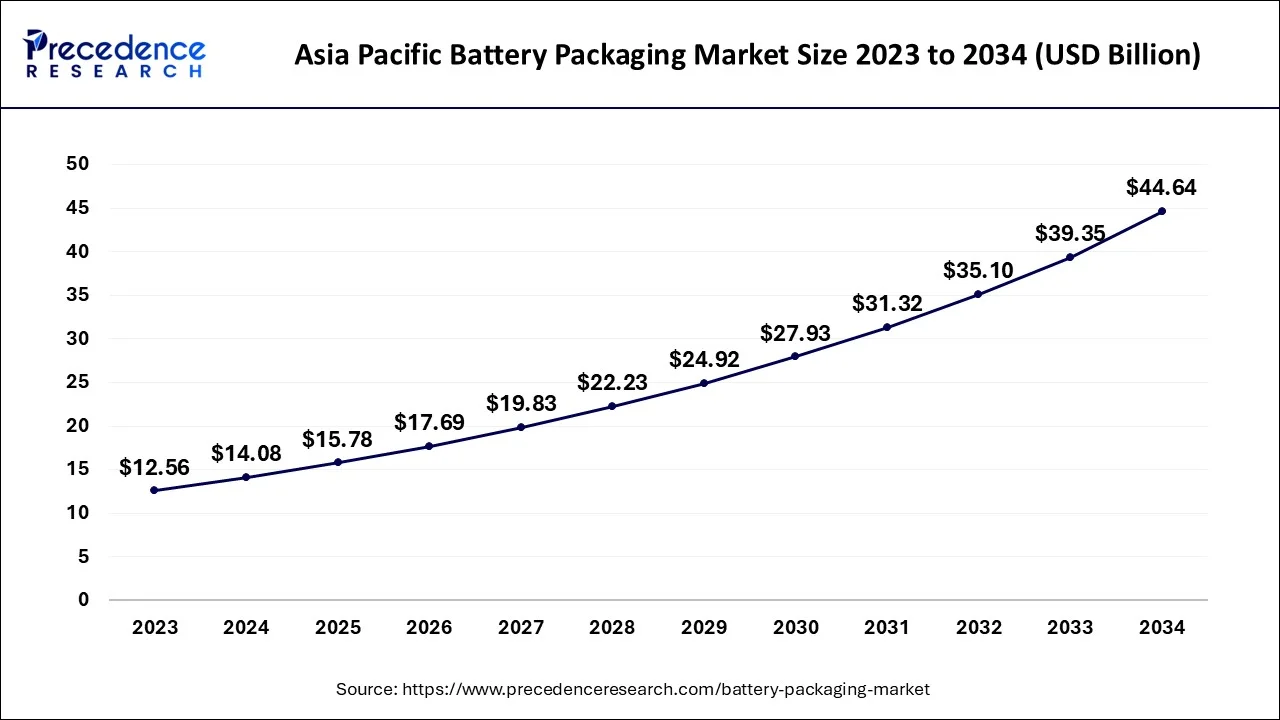
by The Asia Pacific battery packaging market is poised for significant growth, with its valuation expected to surge from USD 15.78 billion in 2025 to approximately USD 44.64 billion by 2034. This expansion reflects a strong CAGR of 12.23% over the forecast period, driven by advancements in technology, smart solutions, renewable energy investment, and increasing demand for portable electronic devices.
What’s Fueling the Asia Pacific Battery Packaging Market Growth?
The market’s upward trajectory is primarily propelled by technological improvements such as AI-based battery management systems (BMS) which enhance battery performance, monitoring, and life span. Furthermore, government initiatives promoting clean energy, rapid industrialization, and urbanization significantly contribute to the burgeoning demand for efficient battery packaging technologies. As the renewable energy sector expands, investment in battery packaging materials and design also accelerates, solidifying the market’s growth foundation.
Asia Pacific Battery Packaging Market Key Insights
-
The market size was USD 14.08 billion in 2024 and is expected to grow to USD 15.78 billion in 2025.
-
Asia Pacific remains the dominant region, spearheading market adoption and innovation.
-
AI-led battery management systems are a key technology segment driving market leadership.
-
PET plastic resin usage holds a substantial share in the packaging materials landscape.
-
Robotics-based sorting technologies are forecasted to record the fastest growth in the coming years.
-
Multi-layer and composite plastic packaging segments will experience the highest growth rate.
-
Municipal waste management and circular economy service providers are emerging as critical end-use segments in the market.
Get this report to explore global market size, share, CAGR, and trends, featuring detailed segmental analysis and an insightful competitive landscape overview @ https://www.precedenceresearch.com/sample/6666
Revenue Breakdown and Market Size Forecast (USD Billion)
| Year | Market Size (USD Billion) |
|---|---|
| 2024 | 14.08 |
| 2025 | 15.78 |
| 2034 | 44.64 |
Artificial Intelligence is at the forefront of revolutionizing the battery packaging market. AI-driven battery management systems optimize the State of Charge (SoC) and State of Health (SoH) metrics critical to electric vehicle performance and reliability. These systems detect early degradation, optimize charging cycles, prevent over/under voltage stress, and ensure superior energy utilization, extending the lifespan of battery packs while maintaining safety in demanding environments.
In manufacturing, AI empowers enhanced quality control by scanning packaging at numerous stages for micro-level defects invisible to human inspectors. This automated precision reduces labor-intensive checks and improves overall packaging consistency and reliability, driving higher standards across the industry.
What Are the Key Growth Factors Driving Market Expansion?
Several factors underpin the rapid growth of the Asia Pacific battery packaging market, including:
-
Growing investments in renewable energy infrastructure, fostering energy security and job creation.
-
Innovative battery materials and lightweight packaging designs that improve fuel economy and product protection.
-
Increased adoption of portable and wearable electronic devices across consumer segments.
-
Urbanization and industrial growth that boost demand for efficient energy storage solutions.
-
Digital transformation fostering smarter manufacturing workflows and closed-loop optimization in battery development.
-
Government policies encouraging clean energy usage and extended battery lifecycle management.
What Emerging Opportunities and Trends Are Shaping the Future?
Could digital transformation and circular economy principles redefine the battery packaging landscape in Asia Pacific? How will innovations in composite plastics and robotics accelerate performance and sustainability? The market’s embrace of multifunctional composites offers enhanced impact resistance and weight reduction, vital for automotive and industrial applications. Robotics-based sorting and packaging promise unprecedented precision and eco-friendly manufacturing processes.
Moreover, the rising focus on circular economy service providers highlights a shift toward sustainability by extending battery life cycles, enhancing recycling, and minimizing environmental footprint—trends that experts believe will continue steering market evolution.
Asia Pacific Battery Packaging Market Regional and Segmentation Overview
The Asia Pacific region leads the market globally, driven by high adoption in countries with burgeoning electric vehicle (EV) sectors and renewable energy projects. The technology type segment shows dominance in AI-based solutions, while robotics-based sorting is the fastest-growing subsegment. PET remains the preferred plastic resin, balancing cost efficiency with environmental considerations, while multi-layer composite plastics gain rapid traction for their superior protective qualities.
Sorting stages focus heavily on primary sorting to ensure battery cell consistency and reliability, critical for electric vehicle battery packs. Quality control is emerging as a high-growth segment, reflecting industry demands for stringent testing before market release. End-use sectors like municipal waste management and circular economy services highlight the increasing importance of sustainability in battery lifecycle management.
Asia Pacific Battery Packaging Market Companies
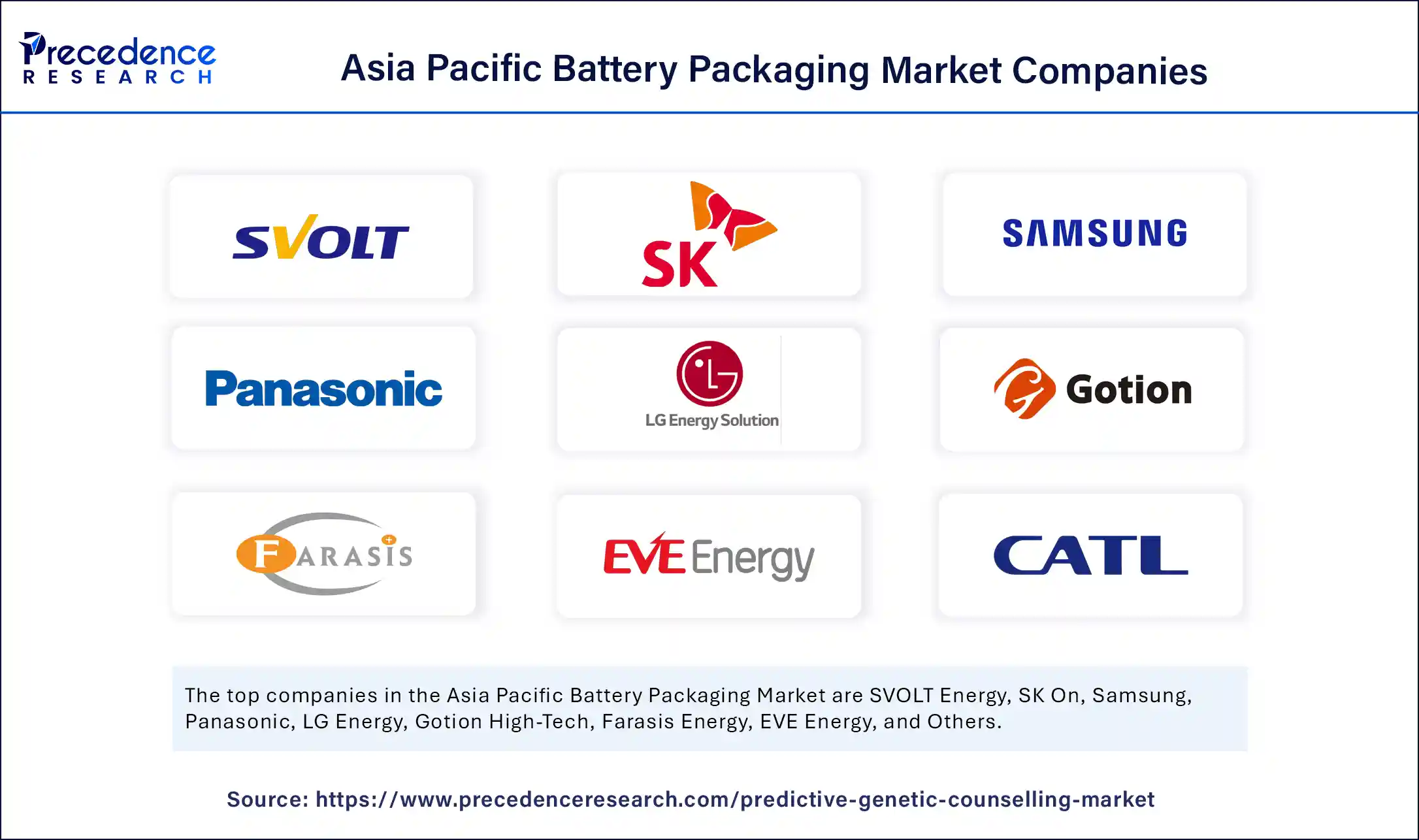
- SVOLT Energy
- SK On
- Samsung
- Panasonic
- LG Energy
- Gotion High-Tech
- Farasis Energy
- EVE Energy
- Contemporary Amperex Technology
- BYD
Challenges and Cost Pressures in the Market
Despite promising growth, the Asia Pacific battery packaging market faces challenges such as managing the complexity of battery recycling and disposal amid growing electronic waste concerns. Environmental regulations demand innovative solutions that minimize toxic materials leakage and carbon footprint without escalating costs. Price volatility in raw materials, technological integration expenses, and stringent quality control requirements add layers of cost pressure that companies must strategically navigate.
Case Study: Robotics Revolutionizing Battery Packaging Efficiency
A leading packaging manufacturer implemented robotics-based sorting and packaging lines integrated with AI-driven quality control. This innovation improved sorting accuracy by 30%, reduced labor costs by 25%, and enhanced product throughput by 40%, demonstrating robotics’ transformative impact on sustainable and efficient battery packaging production.
Read Also: Center Stack Display Market
You can place an order or ask any questions. Please feel free to contact us at [email protected] |+1 804 441 9344
