
 by
by 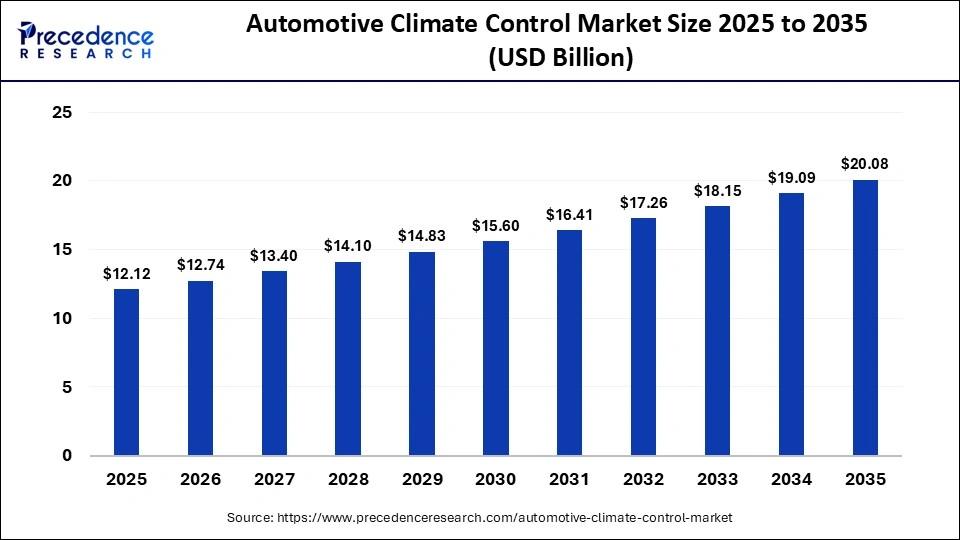
Market Key Takeaways
- North America dominated the market, having the biggest share of 45.5% in 2025.
- Asia Pacific is expected to grow at a notable CAGR of 8.5% between 2026 and 2035.
- By technology, the automatic climate control segment contributed to the largest market share of 42.3% in 2025.
- By technology, the smart/AI-based climate control segment is growing at a CAGR of 7.2% between 2026 and 2035.
- By component, the compressor segment held the major market share of 36.5% in 2025.
- By component, the sensors segment is growing at a notable CAGR of 7.2% between 2026 and 2035.
- By vehicle type, the passenger cars segment accounted for the highest market share of 53.3% in 2025.
- By vehicle type, the electric passenger segment is expanding at a CAGR of 7.3% between 2026 and 2035.
- By distribution channel, the OEM segment captured the highest market share of 72.3% in 2025.
- By distribution channel, the aftermarket segment is poised to grow at a notable CAGR of 7.5% between 2026 and 2035.
- By application, the temperature control segment contributed to largest market share of 48.5% in 2025.
- By application, the battery thermal management segment is growing at a notable CAGR of 7.6% between 2026 and 2035.
Automotive Climate Control Systems Market Overview
The automotive climate control systems market is experiencing steady growth as consumers increasingly prioritize cabin comfort, air quality, and precise temperature regulation, even in mid-range and mass-market vehicles. Automakers are integrating advanced features such as humidity and particulate sensors, automated airflow control, and multi-zone climate systems that allow independent temperature settings for different seating areas. These sensor-driven systems use real-time data on cabin occupancy, sunlight intensity, and external weather conditions to maintain optimal comfort while minimizing energy consumption.
The accelerating shift toward electric vehicles is further reshaping the market, driving demand for highly energy-efficient HVAC solutions that align with battery performance requirements. EV manufacturers are adopting heat pump technologies, smart compressors, and advanced refrigerant cycles to deliver effective heating and cooling with reduced power draw. In parallel, rising consumer awareness of health and wellness is boosting the adoption of cabin air purification technologies, including activated carbon filters and integrated HEPA systems, making enhanced air quality a key differentiator in modern vehicle design.
Impact of Artificial Intelligence on the Automotive Climate Control Systems Market
Artificial intelligence is playing a pivotal role in reshaping automotive climate control systems by enabling smarter, more adaptive, and energy-efficient cabin environments. Modern climate systems now rely on advanced sensors and AI-driven algorithms to automatically regulate temperature, airflow, and humidity based on real-time cabin conditions and occupant behavior. By analyzing data such as passenger load, sunlight intensity, and individual comfort preferences, AI optimizes HVAC performance to deliver personalized comfort while minimizing energy consumption.
In electric vehicles, AI supports the growing adoption of heat pump technology by intelligently managing heating and cooling cycles to reduce power usage and extend driving range, particularly in cold climates. Machine learning models further enhance system efficiency by learning driver habits over time and predicting preferred climate settings. AI also contributes to sustainability efforts by optimizing the use of eco-friendly refrigerants and improving overall system efficiency.
Growth Factors of the Automotive Climate Control Systems Market
- Rising Consumer Demand for Comfort and Air Quality: Increasing awareness of in-cabin comfort, temperature personalization, and air purification is driving the adoption of advanced climate control systems across vehicle segments.
- Growth of Electric and Hybrid Vehicles: The rapid expansion of EV and hybrid production is accelerating demand for energy-efficient HVAC systems, including heat pumps and smart compressors that minimize battery drain.
- Advancements in Sensor, AI, and Connectivity Technologies: Integration of AI, machine learning, and IoT enables intelligent climate control, predictive comfort settings, and remote climate management, enhancing system value.
- Stringent Emission and Energy Efficiency Regulations: Global regulations aimed at reducing vehicle emissions and improving energy efficiency are encouraging the use of eco-friendly refrigerants and optimized HVAC designs.
- Increasing Focus on Health and Wellness: Heightened concern over air pollution and allergens is boosting demand for advanced air filtration and purification systems, especially in urban markets.
- Rising Adoption in Mid-Range and Mass-Market Vehicles: Advanced climate features that were once premium-only are increasingly being offered in mid-range vehicles, expanding market reach.
Regional Insights of the Automotive Climate Control Systems Market
North America represents a mature and technology-driven market, with strong demand for advanced HVAC systems, multi-zone climate control, and cabin air purification. The United States leads adoption due to high vehicle ownership rates, strong EV penetration, and consumer preference for comfort and connected-car features.
Europe is a key market driven by strict environmental regulations, high adoption of eco-friendly refrigerants, and rapid electrification of vehicle fleets. Countries such as Germany, France, and the UK are witnessing strong demand for energy-efficient climate systems, particularly in electric and hybrid vehicles.
Asia Pacific is the fastest-growing region, supported by high vehicle production volumes, rising disposable incomes, and rapid expansion of electric vehicle manufacturing. China, Japan, South Korea, and India are major contributors, with increasing demand for smart climate control and air purification solutions in both passenger and commercial vehicles.
Latin America is experiencing steady growth as automotive production expands and consumers increasingly seek improved comfort features. Brazil and Mexico are leading markets, supported by rising vehicle sales and gradual adoption of advanced HVAC technologies.
The Middle East & Africa region shows moderate growth, driven by extreme climatic conditions that increase demand for high-performance cooling systems. Growing urbanization, rising vehicle ownership, and expanding automotive assembly activities are expected to support long-term market development in the region.
Automotive Climate Control Market Key Players
- Air International Thermal Systems
- Behr Hella Thermocontrol (BHTC)
- BorgWarner Inc.
- Brose Fahrzeugteile GmbH & Co. KG
- Calsonic Kansei Corporation (Marelli)
- Continental AG
- Dana Incorporated
- DENSO Corporation
- Eberspacher Group
- Gentherm Incorporated
- Hanon Systems
- Japan Climate Systems Corporation (JCS)
- Johnson Electric Holdings Limited
- Keihin Corporation
- MAHLE GmbH
Recent Developments
- In November 2025, Shanghai Highly Group unveiled advanced thermal management systems for EVs at the Japan Mobility Show 2025. Highly introduced new indirect heat-pump thermal-management systems for electric vehicles, combining electric compressors, high-voltage coolant heating, and electronic controls to improve cabin comfort, heating/cooling efficiency, and energy use.
- In July 2025, BorgWarner announced that it had won contracts with two major global OEMs to supply its high-voltage coolant heater (HVCH) technology for plug-in hybrid electric vehicle platforms, enhancing cabin and battery heating efficiency in hybrid models.
Get Sample Link : https://www.precedenceresearch.com/sample/7225
