
 by
by 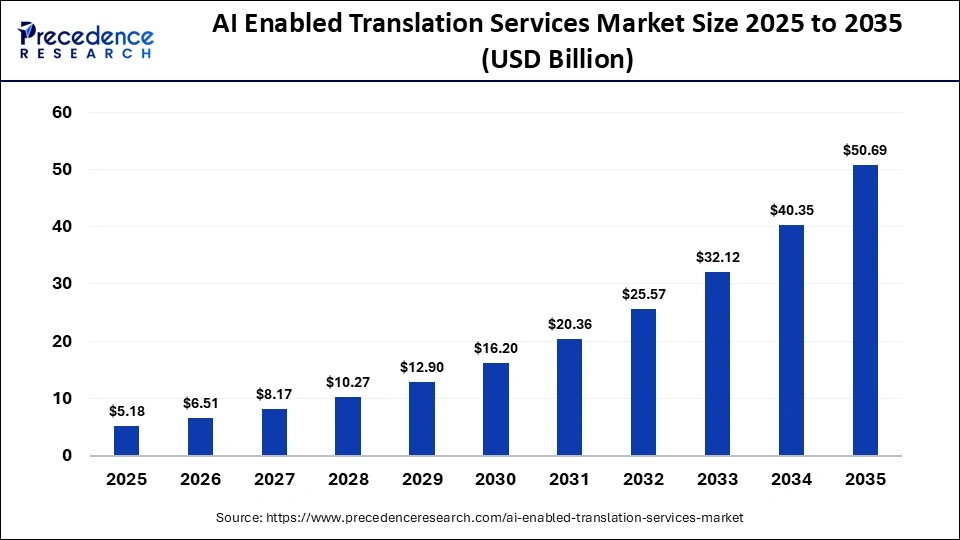
Key Takeaways
- North America held the largest market share of 37.60% in 2025.
- Asia Pacific is projected to grow at the fastest CAGR during the foreseeable period.
- By translation type, the text translation segment held the largest market share of 41.70% in 2025.
- By translation type, the video and multimedia translation segment is projected to grow at the fastest CAGR during the forecast period.
- By technology, the neural machine translation segment held the largest market share of 48.60% in 2025.
- By technology, the large language model-based translation segment is projected to grow at the fastest CAGR during the projection period.
- By application, the content localization segment held a major market share of 28.60% in 2025.
- By application, the media and entertainment localization segment is projected to grow at the fastest CAGR during the foreseeable period.
- By industry vertical, the media and entertainment segment led the market with a 21.80% share in 2025.
- By industry vertical, the e-commerce and retail segment is projected to grow at the fastest CAGR during the forecast period.
Market Overview
AI-enabled translation services encompass advanced language solutions powered by technologies such as neural machine translation, large language models (LLMs), speech recognition, and natural language processing (NLP). These systems enable the seamless conversion of written, spoken, and multimedia content across multiple languages in real time or near real time.
The market includes a wide range of offerings, including software platforms, APIs, and integrated service layers designed to automate translation, localization, subtitling, and multilingual communication. These solutions are increasingly adopted across enterprises, digital ecosystems, and public sector applications to support global engagement.
Market growth is primarily driven by the surge in global digital communication, the rising need for real-time multilingual interactions, and the rapid expansion of e-commerce and cross-border trade. Additionally, continuous advancements in AI and NLP technologies are significantly enhancing translation quality, scalability, and efficiency, further accelerating market adoption.
AI-Enabled Translation Services Market Trends
A key trend shaping the market is the growing demand for translation beyond text, particularly for audio, video, and multimedia content. Organizations are prioritizing faster, scalable, and more engaging content delivery to global audiences, driving the adoption of AI-powered multimedia translation solutions.
Another notable trend is the integration of translation capabilities into widely used business and productivity platforms. Tools such as Slack, Canva, and Google Docs are embedding AI-driven translation features, enabling seamless and real-time multilingual communication within everyday workflows.
The rapid evolution of generative AI and large language models is also transforming the landscape by improving translation accuracy, contextual understanding, and automated error detection. These advancements are reducing dependence on manual processes while enhancing overall output quality.
Furthermore, the role of human linguists is shifting toward supervision, quality assurance, and refinement. While AI handles large-scale translation tasks, human expertise ensures cultural nuance and precision, creating a balanced approach that improves operational efficiency and maximizes return on investment.
Market Scope
| Report Coverage | Details |
| Market Size in 2025 | USD 5.18 Billion |
| Market Size in 2026 | USD 6.51 Billion |
| Market Size by 2035 | USD 50.69 Billion |
| Market Growth Rate from 2026 to 2035 | CAGR of 25.62% |
| Dominating Region | North America |
| Fastest Growing Region | Asia Pacific |
| Base Year | 2025 |
| Forecast Period | 2026 to 2035 |
| Segments Covered | Translation Type, Technology, Application, Industry Vertical, and Region |
| Regions Covered | North America, Europe, Asia-Pacific, Latin America, and Middle East & Africa |
Market Dynamics
Driver: Rising Demand for Real-Time Translation
The growing need for real-time, cost-efficient translation solutions is a major driver of the AI-enabled translation services market. Global industries such as e-commerce, digital media, and online services increasingly rely on instant multilingual communication to engage diverse audiences. AI-powered platforms enable the rapid translation of large volumes of content, including product descriptions, user reviews, and marketing materials, with high scalability.
Moreover, continuous advancements in artificial intelligence particularly large language models (LLMs) are significantly enhancing translation speed, contextual accuracy, and automation capabilities. These innovations are making real-time translation more accessible and reliable, further accelerating market growth.
Restraint: Data Privacy and Security Concerns
Despite strong demand and technological advantages, data privacy remains a critical challenge for the market. Organizations are often required to share sensitive or proprietary information with translation platforms, raising concerns about data security and confidentiality.
With the increasing frequency of data breaches and cyber threats, many enterprises are cautious about adopting AI-enabled translation services, especially in sectors handling confidential data. These concerns can limit adoption rates and create regulatory and compliance hurdles for service providers.
Opportunity: Expanding Adoption in the Healthcare Sector
The healthcare industry presents a significant growth opportunity for AI-enabled translation services. The need for accurate and context-sensitive translation of medical records, patient information, clinical documents, and research data is driving adoption across healthcare systems worldwide.
AI-based translation solutions enable efficient localization of critical medical content while maintaining accuracy and consistency. This capability plays a vital role in improving patient outcomes, enhancing communication between healthcare providers and patients, and supporting global medical collaboration. As healthcare systems continue to digitize and globalize, the demand for reliable translation services is expected to grow substantially.
Regional Insights
North America dominates the AI-enabled translation services market, driven by its advanced technological ecosystem and strong presence of leading AI companies. The United States, in particular, serves as a global hub for innovation in artificial intelligence, natural language processing, and cloud-based platforms. High adoption across industries such as e-commerce, healthcare, media, and enterprise communication further strengthens regional growth. Additionally, substantial investments in AI research and the early adoption of generative AI tools contribute significantly to market expansion in this region.
Europe holds the second-largest share of the market, supported by its highly diverse linguistic landscape and strong regulatory framework promoting multilingual communication. The presence of multiple official languages across the European Union creates consistent demand for translation and localization services. Furthermore, strict data privacy regulations such as GDPR encourage the development of secure and compliant AI translation solutions. Industries like tourism, cross-border e-commerce, and government services are key contributors to market growth in the region.
Asia-Pacific is the fastest-growing region in the market, fueled by rapid digital transformation, increasing internet penetration, and expanding cross-border trade. Countries such as China, India, Japan, and South Korea are witnessing strong demand for AI-powered translation due to their large populations and linguistic diversity. The growth of e-commerce platforms, mobile applications, and digital content consumption further accelerates adoption. Government initiatives promoting digital services and multilingual accessibility also play a vital role in driving market expansion across the region.
AI Enabled Translation Services Market Key Players
- Microsoft
- Amazon Web Services
- OpenAI
- DeepL
- IBM
- Baidu
- Alibaba Cloud
- Tencent
- SAP
- RWS Holdings
- Lionbridge
- TransPerfect
- Appen
- Unbabel
Recent Developments
- In December 2025, Questel, a global leader in IP services, has launched multiple Connectors to integrate its AI-assisted patent translation with Equinox IP Management and other third-party systems, enabling seamless case initiation and communication. The company is also expanding AI applications to enhance translation quality, consistency, and security for global patent services.
- In April 2025, a leading provider of AI-enabled translation and localization services, Acclaro, and a leader in translation AI, Unbabel, announced their partnership to deliver unmatched translation services across tech, media, and e-commerce companies while empowering their shared expertise in localization.
Segments Covered in the Report
By Translation Type
- Text translation
- Speech translation
- Video and multimedia translation
- Document translation
- Website translation
By Technology
- Neural machine translation
- Large language model-based translation
- Hybrid AI translation systems
- Rule-based machine translation
- Statistical machine translation
By Application
- Content localization
- Customer support and chat translation
- Enterprise communication
- Media and entertainment localization
- Education and e-learning translation
- Government and public services translation
By Industry Vertical
- Media and entertainment
- IT and software
- E-commerce and retail
- Healthcare and life sciences
- BFSI
- Travel and hospitality
- Government and public sector
- Others
By Region
- North America
- Latin America
- Europe
- Asia-pacific
- Middle and East Africa
Get Sample Link: https://www.precedenceresearch.com/sample/8192
