
 by
by Smart Connected Pet Collar Market Size in 2026
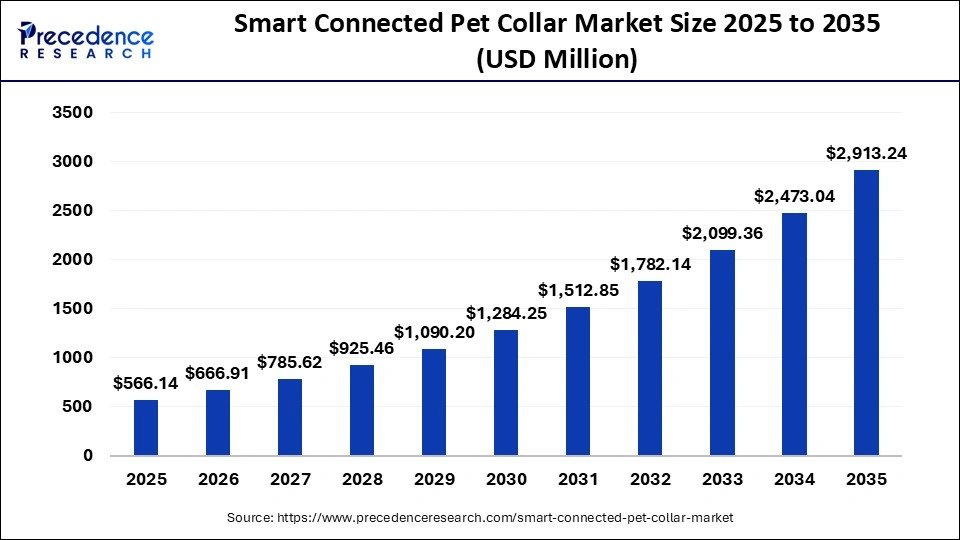
The global smart connected pet collar market is experiencing strong momentum, driven by the rapid adoption of IoT-enabled pet care solutions and increasing awareness around pet health and safety. The market size was valued at USD 566.14 million in 2025 and is projected to grow from USD 666.91 million in 2026 to approximately USD 2,913.24 million by 2035, expanding at a compound annual growth rate (CAGR) of 17.80% during the forecast period.
This impressive growth trajectory is fueled by rising pet ownership, increasing “pet humanization” trends, and the integration of advanced technologies such as AI, GPS tracking, and health-monitoring sensors into pet wearables. As pet owners increasingly seek real-time insights into their pets’ location, behavior, and health status, demand for smart connected collars is expected to surge globally.
Read Also: Synthetic Stem Cells Market
Expanded Market Insights
Why the Market is Growing Rapidly
The smart connected pet collar market is evolving beyond basic tracking devices into comprehensive pet health ecosystems. Modern collars now combine multiple capabilities, including:
- Real-time GPS tracking with geo-fencing alerts
- Activity and fitness monitoring (steps, calories, sleep patterns)
- Health diagnostics (heart rate, respiration, stress levels)
- Behavioral analytics powered by AI
This convergence of hardware, software, and cloud connectivity is transforming pet care into a data-driven and preventive model, similar to human wearable health tech.
Key Growth Drivers
1. Rising Pet Ownership and Humanization
Globally, pets are increasingly considered family members. This emotional shift is pushing owners to invest in premium products that ensure safety, health monitoring, and overall well-being.
2. Increasing Demand for Pet Safety Solutions
Lost pets remain a major concern. Smart collars equipped with GPS and real-time alerts significantly reduce this risk, making them highly attractive to pet owners.
3. Integration of AI and IoT
Artificial Intelligence enhances these devices by:
- Detecting abnormal behavior patterns
- Predicting potential health issues
- Providing personalized care recommendations
4. Growth of Smart Homes and Connected Ecosystems
Smart collars are increasingly integrated with home automation systems, enabling seamless monitoring via smartphones, wearables, and voice assistants.
Emerging Market Trends
AI-Powered Predictive Pet Care
AI is shifting the market from reactive care to predictive care, allowing early detection of illnesses and behavioral changes.
Premiumization and Customization
Consumers are demanding:
- Waterproof and rugged designs
- Long battery life
- Stylish and customizable collars
Subscription-Based Business Models
Companies are generating recurring revenue through:
- Monthly GPS connectivity plans
- Health analytics subscriptions
- Cloud-based pet data services
Expansion of Veterinary Integration
Smart collars are increasingly being used by veterinarians for:
- Remote monitoring
- Post-surgical recovery tracking
- Chronic disease management
Segmental Expansion Insights
Product Type Evolution
While GPS tracking collars dominated in 2025, the future lies in health monitoring and medical alert collars, which are expected to grow fastest due to rising awareness of preventive pet healthcare.
Connectivity Advancements
- Cellular connectivity leads due to long-range tracking capabilities
- Wi-Fi connectivity is growing rapidly due to cost efficiency and smart home integration
Animal Type Trends
- Dogs remain the dominant segment due to higher ownership rates
- Cats are emerging as a fast-growing segment, especially in urban households
Distribution Channel Shift
Online platforms are becoming the preferred purchasing channel due to:
- Wider product variety
- Competitive pricing
- Access to reviews and comparisons
Regional Outlook
North America
North America leads the market due to:
- High pet ownership rates
- Strong purchasing power
- Early adoption of smart technologies
Asia Pacific
Asia Pacific is the fastest-growing region, driven by:
- Rapid urbanization
- Growing middle-class population
- Increasing awareness of pet health and wellness
Countries like China and India are emerging as high-growth markets, supported by rising disposable income and expanding e-commerce ecosystems.
Competitive Landscape
The market is highly competitive, with key players focusing on innovation, product differentiation, and global expansion. Companies are investing in:
- Advanced AI-driven analytics
- Improved battery efficiency
- Enhanced sensor accuracy
- Expansion into new geographic markets
Major players include Garmin Ltd., Tractive, Whistle Labs, FitBark, PetPace, Fi Smart Dog Collar, and Xiaomi, among others.
Future Outlook
The smart connected pet collar market is poised for significant long-term growth, supported by continuous technological innovation and evolving consumer expectations. The transition toward AI-driven pet healthcare, combined with the expansion of IoT ecosystems, will redefine how pet owners interact with and care for their animals.
As the market matures, smart pet collars are expected to become an essential component of modern pet care, offering not just tracking but holistic health and lifestyle management solutions.
Conclusion
In 2026, the smart connected pet collar market stands at USD 666.91 million, marking the beginning of a high-growth phase fueled by technology integration and increasing pet care awareness. With a projected CAGR of 17.80% through 2035, the industry offers strong opportunities for manufacturers, technology providers, and investors alike.
The convergence of AI, IoT, and wearable technology is transforming pet care into a smarter, safer, and more personalized experience—positioning smart collars as a cornerstone of the future pet ecosystem.
Get Sample Copy: https://www.precedenceresearch.com/sample/8221
For inquiries regarding discounts, bulk purchases, or customization requests, please contact us at [email protected]
