
 by
by The global green commodities market is undergoing a structural shift as sustainability becomes a core priority across industries. From renewable energy resources to sustainably sourced agricultural products, green commodities are playing a vital role in reducing environmental impact while supporting economic growth.
The market was valued at USD 185 billion in 2025 and is projected to grow from USD 205.17 billion in 2026 to approximately USD 520.58 billion by 2035, expanding at a CAGR of 10.90%.
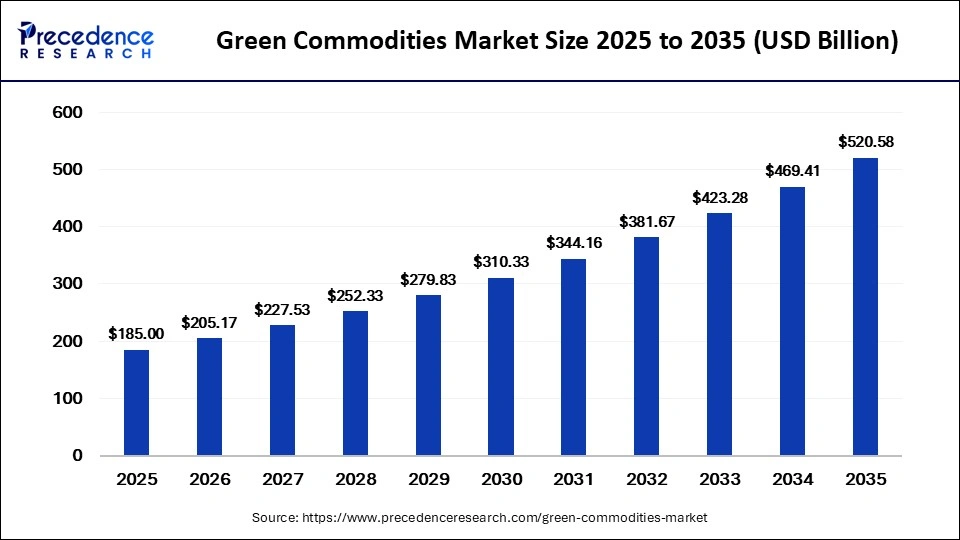
This growth is being driven by rising environmental awareness, stricter regulatory frameworks, and increasing adoption of ESG (Environmental, Social, and Governance) practices worldwide.
Read Also: Recarbonization in Chemicals Market
Quick Insights: What Are the Key Market Highlights?
The green commodities market is expected to grow significantly, reaching USD 520.58 billion by 2035 from USD 185 billion in 2025.
Europe leads the market with a 35% share, while Asia Pacific is projected to grow at the fastest CAGR of 13.5%.
Sustainable agriculture commodities account for 35% of total revenue, making them the dominant segment.
The food & beverage industry contributes around 40% of demand, highlighting its major role in sustainable sourcing.
Energy & biofuel applications are the fastest-growing segment due to global decarbonization efforts.
What Are Green Commodities and Why Do They Matter?
Green commodities refer to raw materials produced through environmentally sustainable practices, minimizing carbon emissions and environmental degradation. These include organic agricultural products, renewable energy sources, biofuels, and certified sustainable materials.
They are essential for enabling industries to transition toward a low-carbon economy while ensuring responsible sourcing and supply chain transparency.
AI Role in the Market: How is Artificial Intelligence Enhancing Sustainability?
Artificial intelligence is significantly improving efficiency and sustainability in the green commodities market. AI-driven analytics enable better forecasting, optimize resource utilization, and enhance supply chain transparency, reducing waste and emissions.
In agriculture, AI-powered precision farming helps improve crop yields while minimizing environmental impact through optimized irrigation and reduced chemical usage.
Market Growth Factors: What is Driving the Surge in Demand?
Why Is Climate Change Awareness Boosting Adoption?
Increasing global concern over climate change is pushing industries to adopt sustainable materials and renewable energy solutions.
How Are Government Policies Supporting Growth?
Governments worldwide are implementing sustainability regulations, incentives, and carbon pricing mechanisms that encourage green commodity adoption.
Are Consumers Influencing Market Trends?
Yes, consumer demand for eco-friendly and ethically sourced products is driving companies to adopt sustainable practices.
How Does Renewable Energy Expansion Fuel the Market?
The global transition toward clean energy is increasing demand for renewable commodities such as biofuels and green energy resources.
Opportunities & Trends: What’s Shaping the Future of Green Commodities?
Can Supply Chain Transparency Become a Competitive Advantage?
Companies are investing in blockchain and digital traceability solutions to ensure ethical sourcing and build consumer trust.
Is Regenerative Agriculture the Future of Farming?
Regenerative agriculture practices are gaining traction for their ability to restore soil health and capture carbon.
Are Carbon Credits Creating New Revenue Opportunities?
The expansion of carbon trading markets is providing financial incentives for sustainable practices.
How Important Are Certifications and Eco-Labels?
Certifications such as organic and fair-trade labels are becoming critical in influencing consumer purchasing decisions.
Segmentation Analysis: Where Are the Key Revenue Streams?
By Commodity Type
- Sustainable agriculture commodities: 35% share
- Renewable energy commodities: fastest-growing segment
By Certification Type
- Organic certification: 30% share
- Sustainability certifications: growing rapidly
By Application
- Food & beverage industry: 40% share
- Energy & biofuel production: fastest-growing segment
By End-Use Industry
- Food & beverage sector: 35% share
- Energy & utilities: strong growth
Regional Analysis: Which Regions Are Leading the Market?
Why Does Europe Dominate the Market?
Europe leads due to strong environmental regulations, sustainability initiatives, and high consumer awareness.
How Strong is North America’s Market Position?
North America holds a significant share driven by corporate ESG commitments and technological advancements.
Why is Asia Pacific the Fastest-Growing Region?
Asia Pacific is expanding rapidly due to industrialization, renewable energy investments, and supportive government policies.
Competitive Landscape: Who Are the Key Players Driving Growth?
Leading companies in the green commodities market include:
- Cargill, Incorporated
- Archer Daniels Midland Company
- Bunge Limited
- Louis Dreyfus Company
- Olam Group Limited
- Nestlé S.A.
- Unilever PLC
- Danone S.A.
- Wilmar International Limited
- Starbucks Corporation
These players are actively investing in sustainable sourcing, renewable energy integration, and ESG-driven strategies to maintain competitive advantage.
Challenges: What Could Restrain Market Growth?
Despite strong growth prospects, the market faces several challenges:
- Lack of standardized global sustainability regulations
- Supply chain disruptions and trade barriers
- Price volatility of green commodities
These factors may create uncertainties and impact market expansion.
Case Study: Sustainable Sourcing Transforming Global Supply Chains
Companies adopting sustainable sourcing practices are improving supply chain transparency, reducing environmental impact, and enhancing brand value. These initiatives demonstrate how green commodities can drive both economic and environmental benefits.
Conclusion: What Lies Ahead for the Green Commodities Market?
The green commodities market is set to become a cornerstone of the global sustainable economy. With increasing investments, regulatory support, and technological advancements, the market is poised for substantial growth in the coming decade.
Companies that prioritize sustainability, innovation, and ethical sourcing will gain a significant competitive edge in this evolving landscape.
Get Sample Link: https://www.precedenceresearch.com/sample/8364
For inquiries regarding discounts, bulk purchases, or customization requests, please contact us at sales@precedenceresearch.com
