
 by
by The global water purifier market size was valued at USD 38 billion in 2025 and is projected to increase from USD 40.96 billion in 2026 to approximately USD 79.85 billion by 2035, expanding at a CAGR of 7.71% from 2026 to 2035. The market is witnessing robust growth due to increasing concerns over water pollution, rising incidences of waterborne diseases, growing urbanization, and continuous advancements in water purification technologies. The adoption of smart purification systems integrated with IoT and AI capabilities is also accelerating market expansion across residential, commercial, and industrial sectors.
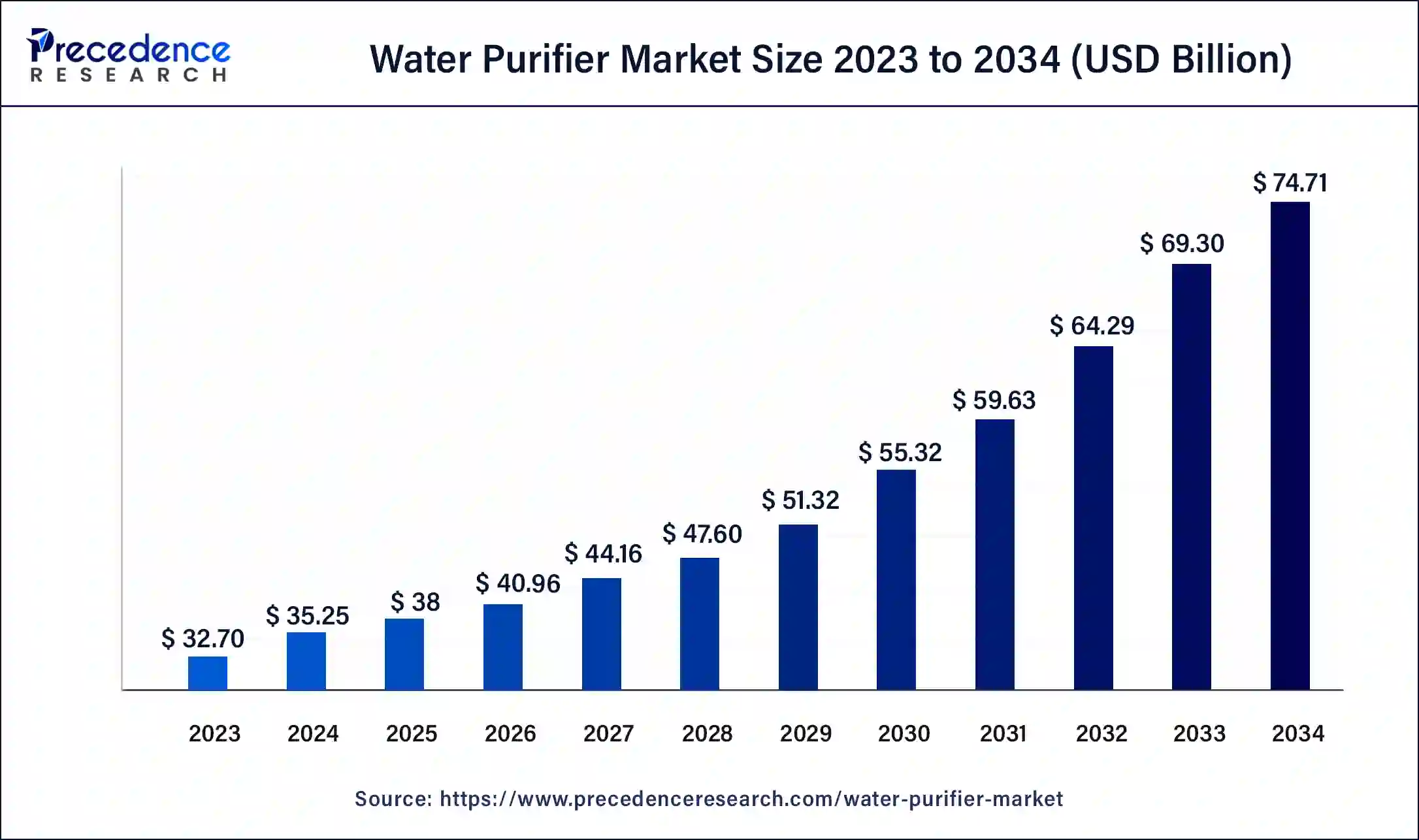
As governments worldwide strengthen regulations on drinking water quality and consumers become increasingly aware of health and hygiene, water purifiers are becoming an essential household and commercial appliance. The growing demand for safe drinking water, coupled with innovations in reverse osmosis (RO), ultraviolet (UV), ultrafiltration (UF), and activated carbon filtration technologies, is expected to drive substantial market growth throughout the forecast period.
Water Purifier Market Overview
Water purifiers are advanced filtration systems designed to remove harmful contaminants, microorganisms, dissolved solids, heavy metals, chemicals, pesticides, viruses, bacteria, and unpleasant odors from drinking water. Modern purification systems utilize technologies such as reverse osmosis (RO), ultraviolet (UV) purification, ultrafiltration (UF), activated carbon filtration, and gravity-based filtration to ensure safe and clean drinking water. Increasing industrialization, urban expansion, and environmental pollution have significantly impacted freshwater quality worldwide. Consequently, consumers, businesses, healthcare institutions, educational facilities, and industries are investing heavily in advanced water purification solutions to safeguard public health and improve water quality.
The water purifier market has evolved beyond conventional filtration systems into intelligent water management solutions equipped with AI-powered monitoring, IoT connectivity, real-time water quality analysis, and predictive maintenance capabilities. These innovations enable users to monitor water quality remotely while optimizing purifier performance and reducing maintenance costs.
Water Purifier Market Scope
| Report Coverage | Details |
|---|---|
| Market Size in 2025 | USD 38 Billion |
| Market Size in 2026 | USD 40.96 Billion |
| Market Size by 2035 | USD 79.85 Billion |
| Growth Rate (2026-2035) | CAGR of 7.71% |
| Largest Market | Asia Pacific |
| Base Year | 2025 |
| Forecast Period | 2026 to 2035 |
| Segments Covered | Product Type, End User, Region |
| Regions Covered | North America, Europe, Asia-Pacific, Latin America, Middle East & Africa |
Download the Sample: https://www.precedenceresearch.com/sample/2975
Water Purifier Market Growth Factors
- Rising Water Pollution and Contamination: Rapid industrialization, urbanization, mining activities, agricultural runoff, and improper wastewater disposal continue to contaminate freshwater sources. Increasing concentrations of heavy metals, pesticides, microplastics, and harmful microorganisms are significantly driving demand for advanced water purification systems across residential and commercial sectors.
- Increasing Health Awareness: Consumers are becoming increasingly aware of the health risks associated with contaminated drinking water, including gastrointestinal infections, cholera, typhoid, dysentery, hepatitis, and various chronic illnesses. This growing awareness is encouraging greater adoption of advanced water filtration technologies worldwide.
- Government Initiatives Supporting Safe Drinking Water: Governments across the globe are investing heavily in drinking water infrastructure and implementing strict regulations to improve water quality. Programs such as India’s Jal Jeevan Mission, China’s clean water initiatives, and various United Nations Sustainable Development Goals (SDGs) are encouraging the widespread adoption of water purification technologies.
- Technological Advancements: Continuous innovation in filtration technologies, including smart RO systems, UV sterilization, AI-enabled purification, IoT connectivity, and multi-stage filtration systems, is significantly improving purification efficiency while enhancing user convenience.
- Growing Urbanization and Industrial Development: Rapid urban population growth is increasing pressure on existing water infrastructure. Rising residential construction, commercial establishments, healthcare facilities, educational institutions, and manufacturing industries are driving demand for reliable and efficient water purification systems.
Value Chain Analysis of the Water Purifier Market
- Research and Product Development: Manufacturers invest significantly in developing advanced purification technologies, improving filtration efficiency, reducing energy consumption, minimizing water wastage, and integrating smart monitoring features into next-generation purification systems.
- Raw Material Procurement: The manufacturing process begins with sourcing essential components including RO membranes, activated carbon filters, UV lamps, electronic sensors, pumps, storage tanks, plastic housings, stainless steel components, and IoT-enabled electronic modules.
- Manufacturing and Assembly: Manufacturers assemble complete purification systems using advanced automation processes while ensuring compliance with international safety and quality standards. Product testing focuses on filtration performance, durability, energy efficiency, and water recovery rates.
- Distribution and Supply Chain: Finished products are distributed through multiple channels including authorized dealers, retail stores, specialty appliance outlets, supermarkets, online marketplaces, direct sales networks, and business-to-business distributors.
- Installation and After-Sales Services: Professional installation, periodic maintenance, filter replacement services, annual maintenance contracts (AMCs), customer support, and warranty management play a critical role in enhancing customer satisfaction and long-term product performance.
What is the Role of AI in the Water Purifier Market?
- Artificial Intelligence (AI) is rapidly transforming the water purifier market by enabling intelligent monitoring, predictive maintenance, automated filtration management, and enhanced user experiences. AI-powered water purifiers continuously analyze real-time water quality data using integrated sensors that monitor Total Dissolved Solids (TDS), pH levels, turbidity, temperature, pressure, and contaminant concentrations.
- Machine learning algorithms automatically optimize purification cycles based on incoming water quality, helping improve filtration efficiency while reducing unnecessary water wastage. AI-enabled systems can also identify abnormal water quality patterns and immediately notify users through connected mobile applications.
- Smart water purifiers equipped with AI can monitor filter health and accurately predict replacement schedules, reducing maintenance costs while ensuring consistently high purification performance. Virtual assistants integrated into smart appliances further improve convenience by providing voice-enabled controls, maintenance reminders, and real-time usage reports.
- For commercial facilities and industrial applications, AI-powered analytics enable centralized monitoring of multiple purification systems, improving operational efficiency while minimizing downtime and maintenance expenses.
- As digital transformation continues across consumer appliances, AI is expected to become one of the most important competitive differentiators within the global water purifier market.
Five Key Forces Driving Water Purifier Market Growth
1. Increasing Demand for Safe Drinking Water
Growing concerns regarding contaminated water supplies are encouraging consumers worldwide to invest in advanced purification technologies capable of delivering clean, safe, and healthy drinking water.
2. Rising Prevalence of Waterborne Diseases
The increasing incidence of diseases caused by unsafe drinking water is strengthening demand for reliable residential, commercial, and institutional water purification systems.
3. Expansion of Smart Home Technologies
Consumers are increasingly adopting connected home appliances equipped with AI, IoT connectivity, remote monitoring, and automated maintenance capabilities, making smart water purifiers an attractive investment.
4. Government Investments in Water Infrastructure
Public investments aimed at improving drinking water quality, wastewater treatment, sanitation infrastructure, and environmental sustainability continue to support long-term market expansion.
5. Continuous Technological Innovation
Advancements in membrane technology, energy-efficient purification, multi-stage filtration, AI-driven monitoring, and environmentally sustainable purification solutions continue to improve product performance while expanding consumer adoption.
Benefits of Using Water Purifiers
Water purifiers have become an essential part of modern households and commercial establishments as concerns about water contamination continue to rise worldwide. Advanced purification systems not only improve the taste and odor of drinking water but also eliminate harmful microorganisms, heavy metals, pesticides, chlorine, and other contaminants that may pose serious health risks. With growing awareness of preventive healthcare, consumers increasingly view water purification as a long-term investment in health and well-being.
Safe and Healthy Drinking Water
- The primary benefit of water purifiers is their ability to provide safe drinking water by removing bacteria, viruses, parasites, heavy metals, dissolved impurities, pesticides, and harmful chemicals. Technologies such as reverse osmosis (RO), ultraviolet (UV), ultrafiltration (UF), and activated carbon filtration work together to ensure high-quality water suitable for everyday consumption.
Better Health and Disease Prevention
- Contaminated water remains one of the leading causes of gastrointestinal infections, diarrhea, typhoid, cholera, hepatitis, and other waterborne illnesses. Water purifiers significantly reduce these health risks by eliminating disease-causing microorganisms and improving water quality. Regular access to purified drinking water also supports stronger immunity and overall wellness.
Improved Taste and Odor
- Water purification systems effectively remove chlorine, sediments, dissolved organic compounds, and unpleasant odors that often affect municipal water supplies. The result is cleaner, fresher, and better-tasting drinking water, encouraging higher daily water consumption.
Convenience and Continuous Supply
- Modern purification systems provide an uninterrupted supply of purified water at home, in offices, hospitals, schools, hotels, and restaurants. Smart purification systems equipped with storage tanks and automatic purification cycles further enhance user convenience while reducing dependence on bottled water.
Environmentally Sustainable Alternative
- The growing adoption of water purifiers helps reduce plastic waste generated by bottled water consumption. By encouraging refillable drinking water solutions, advanced purification systems contribute toward environmental sustainability and reduced carbon emissions associated with bottled water production and transportation.
Why the Water Purifier Market is Growing
The water purifier market is experiencing sustained growth as consumers increasingly recognize the importance of access to clean and safe drinking water. Rapid industrialization, urban expansion, deteriorating freshwater quality, and increasing pollution levels have intensified the demand for advanced purification technologies across both developed and emerging economies.
Growing awareness of preventive healthcare is also changing consumer purchasing behavior. Households are becoming more willing to invest in premium purification systems that offer superior filtration performance, convenience, and long-term health benefits. Rising disposable incomes, expanding middle-class populations, and increasing access to e-commerce platforms are further supporting product adoption globally.
Commercial establishments such as offices, educational institutions, healthcare facilities, restaurants, hotels, and manufacturing plants are also investing heavily in advanced purification systems to ensure regulatory compliance and protect employee and customer health. These factors collectively continue to strengthen long-term market growth.
Latest Trends in the Water Purifier Market
- Growing Adoption of Smart Water Purifiers: Manufacturers are increasingly launching smart water purifiers equipped with Wi-Fi connectivity, IoT-enabled sensors, mobile applications, and AI-powered monitoring systems. These intelligent devices allow users to monitor water quality, receive maintenance notifications, and control purification settings remotely.
- Expansion of Multi-Stage Filtration Systems: Consumers increasingly prefer purification systems that combine multiple filtration technologies such as RO, UV, UF, activated carbon, sediment filtration, and mineral enhancement. Multi-stage filtration offers higher purification efficiency while addressing a broader range of contaminants.
- Focus on Sustainable Water Purification: Environmental sustainability has become a major focus area for manufacturers. Companies are developing water-efficient RO systems, recyclable filters, eco-friendly materials, and energy-saving purification technologies to minimize environmental impact while maintaining high purification performance.
- Rising Popularity of Compact and Modern Designs: Urban consumers increasingly prefer compact countertop and under-sink purification systems that require minimal installation space while offering premium performance and attractive aesthetics.
- Subscription-Based Maintenance Services: Manufacturers are expanding subscription-based maintenance programs that include scheduled filter replacement, annual servicing, remote diagnostics, and predictive maintenance. These service models improve customer retention while ensuring consistent purification performance.
Water Purifier Market Opportunities
Expansion of Smart Purification Technologies
- The growing popularity of smart homes presents significant opportunities for water purifier manufacturers. AI-enabled purification systems integrated with IoT connectivity, mobile applications, voice assistants, and predictive maintenance capabilities are attracting technology-focused consumers worldwide.
- Future smart water purifiers will increasingly feature automatic contaminant detection, self-adjusting filtration cycles, remote diagnostics, cloud-based performance analytics, and automated service scheduling. These innovations will significantly enhance user convenience while improving purification efficiency.
- Emerging economies across Asia Pacific, Latin America, and the Middle East present substantial growth opportunities as rising disposable incomes and urbanization increase demand for premium household appliances.
- Manufacturers are also expected to benefit from increasing commercial demand across hospitals, educational institutions, hotels, restaurants, office complexes, and industrial facilities seeking reliable water purification solutions.
Why the Future Looks Promising
The long-term outlook for the global water purifier market remains highly positive. Increasing environmental pollution, water scarcity, urbanization, stricter government regulations, rising health awareness, and continuous technological innovation are expected to sustain strong market growth throughout the forecast period.
The industry is rapidly evolving from conventional filtration systems toward intelligent water management platforms capable of delivering real-time monitoring, predictive analytics, automated maintenance, and personalized purification settings. Companies investing in smart technologies, sustainability initiatives, and customer-centric service models are expected to strengthen their competitive positions over the coming decade.
As access to clean drinking water becomes an increasingly important public health priority worldwide, demand for advanced water purification solutions is expected to continue expanding across residential, commercial, and industrial applications.
Recent Developments in the Water Purifier Market
- February 2026: Samsung introduced its Bespoke AI Water Purifier featuring artificial intelligence, integrated touchscreen controls, voice-enabled operation through Bixby, and intelligent ice-making functionality. The new product demonstrates the industry’s transition toward AI-enabled connected appliances.
- May 2026: Xiaomi expanded its smart home appliance ecosystem by launching the Mi Home Water Purifier 2 1600G, featuring high-flow reverse osmosis technology, intelligent monitoring capabilities, and permanent kitchen installation for modern households.
- May 2025: SK Magic launched the SK Magic X PSG Ultra-Compact Direct Water Purifier, developed in collaboration with Paris Saint-Germain Football Club, combining premium aesthetics with advanced purification technology.
- May 2025: Xiaomi introduced the Mijia Water Purifier S1 (1000G) equipped with high-capacity reverse osmosis technology capable of producing up to 2.78 liters of purified water per minute while supporting smart monitoring through connected applications.
- May 2025: JIMMY introduced the R9 Countertop RO Water Purifier, targeting consumers seeking compact, portable, and high-performance household purification solutions.
- September 2024: LG Electronics expanded its product portfolio by launching nine new water purifier models featuring stainless steel storage tanks, enhanced hygiene protection, energy-efficient operation, and smart maintenance features. These product launches illustrate the industry’s increasing emphasis on intelligent technologies, improved purification efficiency, sustainability, and enhanced consumer convenience.
Water Purifier Market Companies
- Panasonic Corporation
- LG Electronics
- Kent Ro System Ltd
- Halo Source Inc.
- Eureka Forbes Limited
- Best Water Technology
- A. O. Smith Corporation
- Amway Corporation
- Brita
- Pentair Plc.
Read More: U.S. Concierge Medicine Market
Segments Covered in the Report
By Product Type
- Activated Carbon Filters
- UV Water Purifier
- RO Water Purifier
By End User
- Residential
- Commercial
By Region
- North America
- Europe
- Asia Pacific
- Latin America
- Middle East & Africa
Future Outlook
The future of the global water purifier market appears exceptionally promising as governments, businesses, and consumers increasingly prioritize access to clean, safe, and sustainable drinking water. Rising environmental pollution, rapid urbanization, aging water infrastructure, climate change, and growing concerns regarding emerging contaminants are expected to continue driving strong market demand throughout the forecast period.
Artificial Intelligence is expected to fundamentally transform the next generation of water purification systems. Future products will increasingly utilize machine learning algorithms, predictive analytics, real-time contaminant detection, cloud-based monitoring, and automated maintenance scheduling to optimize purification performance while minimizing operational costs.
Smart home integration will continue expanding as consumers seek connected appliances capable of interacting seamlessly with smartphones, voice assistants, and home automation platforms. Manufacturers are expected to invest heavily in IoT-enabled purification systems that provide real-time water quality monitoring, predictive filter replacement, usage analytics, and personalized recommendations.
