
 by
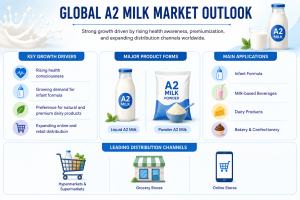
by The global A2 milk market is experiencing steady growth due to shifting consumer preferences toward healthier dairy alternatives. The market size reached USD 2.86 billion in 2025 and is forecast to rise from USD 3.19 billion in 2026 to approximately USD 8.35 billion by 2035, growing at a CAGR of 11.31% during the forecast period. Factors such as increasing health consciousness, greater awareness of the potential digestive benefits of A2 milk, and the growing demand for A2-based infant formula and functional dairy products are expected to support market growth.
Why Consumers Are Switching to A2 Milk
Consumer preferences in the dairy industry have shifted significantly over the past decade as people become more conscious of the relationship between nutrition and overall well-being. One of the primary reasons behind the growing popularity of A2 milk is the increasing awareness of digestive health. Many consumers who experience mild digestive discomfort after drinking conventional milk are exploring A2 milk as an alternative because it contains only the A2 beta-casein protein instead of both A1 and A2 proteins. Although A2 milk is not suitable for individuals with milk allergies or lactose intolerance, many consumers perceive it to be gentler on the digestive system, making it an attractive option for daily consumption.
The growing demand for natural and minimally processed foods is another factor encouraging consumers to switch to A2 milk. Modern shoppers are increasingly reading product labels and seeking foods that are free from artificial additives, hormones, and unnecessary processing. A2 milk aligns well with this trend because it is often marketed as a premium dairy product obtained from carefully selected cow breeds. Rising disposable incomes have also encouraged consumers to spend more on premium food products that they believe provide additional nutritional value. As awareness continues to grow through healthcare professionals, nutritionists, and digital media, the consumer base for A2 milk is expected to expand steadily across both developed and emerging markets.
Download the Sample: https://www.precedenceresearch.com/sample/1232
Growing Adoption of A2 Milk in Infant Nutrition
Infant nutrition has become one of the fastest-growing application areas for A2 milk as parents increasingly prioritize products that support healthy growth and digestive comfort. Parents are becoming more selective when choosing infant formula and dairy-based nutrition products, seeking ingredients that closely resemble natural milk composition while being gentle on infants’ developing digestive systems. This has encouraged manufacturers to develop premium infant formulas containing A2 beta-casein protein as an important ingredient.
The rising number of working parents, growing urbanization, and increasing spending on premium baby food products are further driving demand for A2-based infant nutrition. Manufacturers are investing heavily in research and development to create scientifically formulated products enriched with vitamins, minerals, probiotics, and essential nutrients alongside A2 protein. In addition, expanding healthcare awareness and improving access to pediatric nutrition advice are encouraging parents to choose high-quality infant nutrition products. As birth rates remain strong in many developing countries and disposable incomes continue to rise, the infant nutrition segment is expected to remain a major contributor to the long-term growth of the A2 milk market.
Impact of Health and Wellness Trends on Market Growth
The global health and wellness movement has become one of the strongest growth drivers for the A2 milk market. Consumers are increasingly adopting healthier lifestyles by choosing foods that support digestive health, immunity, and overall wellness. Rather than treating illnesses after they occur, many people are focusing on preventive nutrition, making premium dairy products like A2 milk an attractive dietary choice. This shift has encouraged dairy companies to expand their portfolios with products that align with wellness-focused lifestyles.
Growing interest in functional foods has also accelerated market growth. Consumers are looking for products that provide nutritional benefits beyond basic nourishment, leading to increased demand for fortified A2 milk containing probiotics, calcium, vitamin D, omega-3 fatty acids, and high-quality proteins. The popularity of fitness programs, healthy eating habits, and clean-label diets has further strengthened consumer interest in premium dairy products. As governments, healthcare organizations, and nutrition experts continue promoting balanced diets and healthy lifestyles, the demand for A2 milk is expected to grow steadily across all age groups.
How E-commerce is Transforming A2 Milk Distribution
The rapid growth of e-commerce has transformed the way consumers purchase dairy products, including A2 milk. Online grocery platforms, mobile shopping applications, and direct-to-consumer subscription services have made premium dairy products more accessible than ever before. Consumers now have the convenience of ordering fresh A2 milk and related products from their homes, eliminating the need to visit physical retail stores. This shift has been particularly beneficial in urban areas where busy lifestyles increase demand for convenient shopping solutions.
E-commerce also provides dairy manufacturers with valuable opportunities to reach a wider customer base while reducing dependence on traditional retail channels. Companies can showcase their complete product portfolios, educate consumers about the benefits of A2 milk, and engage directly with customers through digital marketing campaigns and personalized recommendations. Subscription-based delivery models have become increasingly popular, ensuring consistent product availability while strengthening customer loyalty. As internet penetration, smartphone usage, and digital payment systems continue to expand globally, online retail is expected to become one of the fastest-growing distribution channels for A2 milk.
Investment Opportunities in the Global A2 Milk Market
The global A2 milk market presents attractive investment opportunities due to rising consumer demand for premium dairy products and increasing awareness of digestive health. Investors are showing growing interest in dairy companies specializing in A2 milk production, organic farming, infant nutrition, and value-added dairy products. Continuous market expansion creates opportunities for investments in dairy processing facilities, genetic breeding programs, advanced farming technologies, and cold-chain infrastructure.
Emerging economies offer particularly strong investment potential because of rising disposable incomes, expanding middle-class populations, and increasing demand for premium nutrition products. Venture capital firms, private equity investors, and multinational food companies are actively supporting dairy businesses focused on innovation, sustainability, and product diversification. Investments in automation, artificial intelligence, blockchain traceability, and environmentally friendly production methods are expected to improve operational efficiency while strengthening long-term profitability. As consumer awareness continues to increase, companies investing in research, branding, and product innovation are likely to benefit from sustained market growth.
Read Also: Whey Protein Market
Regional Analysis
The global A2 milk market demonstrates significant regional variations, driven by differences in consumer awareness, dairy consumption patterns, disposable income, agricultural practices, and retail infrastructure. While developed economies are witnessing increasing demand for premium and functional dairy products, emerging markets are creating new growth opportunities due to rising urbanization and improving living standards. Continuous investments in dairy farming, product innovation, and distribution networks are expected to strengthen market expansion across all major regions during the forecast period.
Asia Pacific
Asia Pacific holds the largest share of the global A2 milk market and is expected to maintain its leadership throughout the forecast period. The region benefits from a large dairy-consuming population, increasing health awareness, rising disposable incomes, rapid urbanization, and a growing middle-class population with higher spending power. Consumers are becoming more conscious about digestive health and premium nutrition, leading to increased demand for A2 milk and value-added dairy products.
North America
North America is emerging as one of the most attractive markets for A2 milk, supported by changing consumer preferences toward clean-label, organic, and minimally processed foods. Consumers across the United States and Canada are increasingly prioritizing digestive wellness, nutritional transparency, and premium dairy products, creating strong demand for A2 milk. The region’s high purchasing power allows consumers to spend more on specialty dairy products that offer perceived health benefits.
Europe
Europe represents a mature yet steadily expanding market for A2 milk, supported by high consumer awareness of nutrition, stringent food safety regulations, and increasing demand for premium dairy products. Consumers throughout the region are placing greater emphasis on natural ingredients, organic certification, and environmentally sustainable food production, making A2 milk an attractive option within the premium dairy segment.
Countries including the United Kingdom, Germany, France, Italy, and the Netherlands are experiencing increasing demand for functional dairy products that support digestive health and overall wellness.
Latin America
Latin America is becoming an increasingly promising market for A2 milk due to improving economic conditions, expanding urban populations, and rising consumer awareness regarding healthy nutrition. Countries such as Brazil, Mexico, Argentina, Chile, and Colombia are witnessing gradual growth in premium dairy consumption as disposable incomes continue to rise and consumers seek higher-quality food products. The expansion of organized retail, modern supermarkets, specialty grocery stores, and online shopping platforms has improved the availability of premium dairy products throughout the region.
Middle East & Africa
The Middle East & Africa represents an emerging market with considerable long-term growth potential for A2 milk. Rapid urbanization, rising disposable incomes, changing dietary habits, and increasing awareness of preventive healthcare are encouraging consumers to explore premium dairy products. Urban consumers are becoming more interested in natural, organic, and functional foods that support healthy lifestyles, creating favorable conditions for A2 milk adoption.
Countries across the Gulf Cooperation Council (GCC), including the United Arab Emirates, Saudi Arabia, and Qatar, are witnessing growing demand for imported premium dairy products due to strong purchasing power and expanding modern retail infrastructure. Supermarkets, hypermarkets, specialty food retailers, and e-commerce platforms are increasing the availability of A2 milk and other premium dairy products.
Competitive Landscape
The global A2 milk market is highly competitive, with multinational dairy companies, regional producers, and emerging startups focusing on product innovation, sustainability, and geographic expansion.
Key competitive strategies include:
- Launching premium and organic A2 dairy products
- Expanding infant nutrition portfolios
- Investing in genetic testing and selective breeding
- Strengthening cold-chain infrastructure
- Forming strategic partnerships and acquisitions
- Expanding online and direct-to-consumer sales
- Promoting sustainable dairy farming practices
- Increasing investment in research and development
As competition intensifies, companies are differentiating themselves through superior product quality, transparent sourcing, eco-friendly packaging, and digital consumer engagement.
Future Outlook
The future of the A2 milk market appears highly promising as consumers continue to prioritize digestive wellness, premium nutrition, and clean-label food products. Advances in dairy genetics, precision farming, artificial intelligence, blockchain-enabled traceability, and sustainable production practices are expected to reshape the industry over the next decade.
Manufacturers will continue expanding into functional dairy products, personalized nutrition, and value-added food applications while strengthening their digital distribution networks. Growing demand from emerging economies, increasing investments in dairy infrastructure, and expanding consumer awareness will create new growth opportunities across the global market.
You can place an order or ask any questions, please feel free to contact us at sales@precedenceresearch.com | +1 804 441 8440
