
 by
by 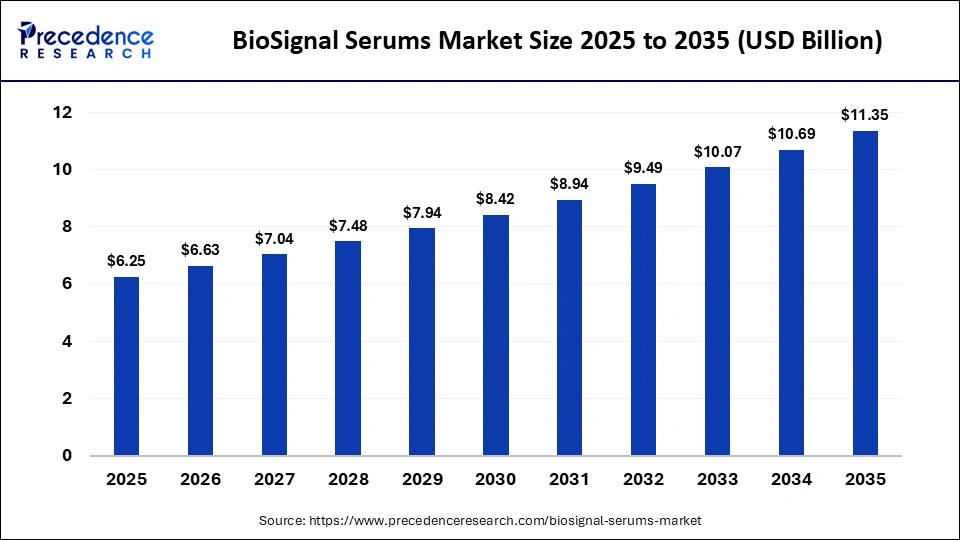
Table of Contents
ToggleKey Takeaways
- Asia-Pacific dominated the global biosignal serums market in 2025.
- Europe is expected to grow at the fastest CAGR in the market during the forecast period.
- By product type, the anti-aging serums segment held a dominant position in the market in 2025.
- By product type, the peptide and active biosignal serums segment is expected to grow at the fastest CAGR in the market between 2026 and 2035.
- By ingredient type, the hyaluronic acid segment led the global market in 2025.
- By ingredient type, the peptides segment is expected to grow with the highest CAGR in the market during the studied years.
- By application, the anti-aging and wrinkle reduction segment held the largest market share in 2025.
- By application, the pigmentation treatment segment is expected to expand rapidly in the market in the coming years.
- By end-user, the individual consumers segment registered its dominance in the market in 2025.
- By end-user, the e-commerce retailers segment is expected to witness the fastest growth in the market over the forecast period.
Market overview
The biosignal serums market is experiencing strong growth as consumers increasingly seek advanced skincare solutions supported by scientific research and biotechnology. Biosignal serums are formulated with bioactive ingredients such as peptides, growth factors, and signaling molecules that interact with skin cells to support repair, regeneration, and overall skin health. These formulations are designed to stimulate the skin’s natural renewal processes, helping to improve elasticity, reduce visible signs of aging, and enhance skin texture. Many premium skincare brands are incorporating biotechnology-driven ingredients into their product portfolios to differentiate themselves in a highly competitive beauty and personal care market. As consumers continue to prioritize evidence-based and results-oriented skincare, biosignal serums are emerging as a prominent category within high-end dermatological and cosmetic products.
Role of artificial intelligence in biosignal serums
Artificial intelligence is playing an important role in advancing the biosignal serums market by accelerating research, product development, and personalization. AI-powered research platforms help scientists analyze complex skin biology data, identify promising bioactive ingredients, and optimize formulation processes. These technologies allow skincare companies to develop more targeted and effective products within shorter development timelines. In addition, machine learning tools are increasingly being used to deliver personalized skincare recommendations based on individual skin characteristics, lifestyle habits, and environmental exposure. As digital beauty technologies continue to expand, artificial intelligence is expected to enhance both product innovation and customer engagement within the biosignal serums market.
Biosignal serums market trends
One of the key trends shaping the biosignal serums market is the growing demand for precision regenerative skincare. Consumers are increasingly interested in products that work at the cellular level to restore and revitalize skin health. This has encouraged brands to develop customized skincare solutions tailored to specific skin conditions and individual needs.
Technological advancements are also driving innovation within the market. Progress in biotechnology, peptide engineering, and molecular skincare research is enabling the development of more effective biosignal serum formulations that target skin repair and anti-aging processes with greater accuracy.
Another notable trend is the diversification of bioactive ingredients used in these formulations. The market includes a wide range of ingredients such as growth factors, peptides, stem-cell derived extracts, antioxidants, and plant-based bioactive compounds. These ingredients are combined in specialized formulations designed to support skin regeneration, protection, and long-term skin health.
Market Scope
| Report Coverage | Details |
| Market Size in 2025 | USD 6.25 Billion |
| Market Size in 2026 | USD 6.63 Billion |
| Market Size by 2035 | USD 11.35 Billion |
| Market Growth Rate from 2026 to 2035 | CAGR of 6.15% |
| Dominating Region | Asia Pacific |
| Fastest Growing Region | Europe |
| Base Year | 2025 |
| Forecast Period | 2026 to 2035 |
| Segments Covered | Product Type, Ingredient Type, Application,End User , and region |
| Regions Covered | North America, Europe, Asia-Pacific, Latin America, and Middle East & Africa |
Regional Insights
North America holds a significant share of the biosignal serums market due to the strong presence of premium skincare brands, advanced dermatological research, and high consumer awareness of scientifically formulated skincare products. The United States leads the regional market as consumers increasingly demand anti-aging and regenerative skincare solutions backed by biotechnology. The growing popularity of medical-grade skincare products, dermatologist-recommended treatments, and aesthetic clinics is also supporting market growth. In addition, the rapid adoption of digital beauty technologies, including AI-driven skin analysis tools and personalized skincare platforms, is further strengthening the demand for biosignal serums across the region.
Europe represents an important market for biosignal serums, driven by increasing interest in high-performance skincare and clean beauty formulations. Countries such as France, Germany, the United Kingdom, and Italy are major contributors to regional growth due to their well-established cosmetic industries and strong consumer demand for premium skincare products. European consumers are increasingly seeking innovative formulations that combine biotechnology with natural ingredients. Regulatory standards for cosmetics in the region also encourage the development of safe and scientifically validated products, which is promoting the adoption of biosignal serums among skincare brands and consumers.
Asia-Pacific is expected to witness the fastest growth in the biosignal serums market due to the region’s large beauty and personal care industry and rising consumer interest in advanced skincare solutions. Countries such as South Korea, Japan, China, and India are key markets where consumers actively adopt innovative beauty products. South Korea and Japan, in particular, are recognized for their leadership in skincare innovation and biotechnology-based cosmetics. Increasing disposable income, expanding e-commerce platforms, and the growing influence of social media beauty trends are further accelerating the adoption of biosignal serums in the region.
The biosignal serums market in Latin America is gradually expanding as consumers become more aware of advanced skincare products and anti-aging treatments. Brazil and Mexico are among the leading markets in the region, supported by a growing beauty and cosmetics industry. The increasing presence of international skincare brands and the rising popularity of dermatological treatments are contributing to the demand for premium skincare products such as biosignal serums. In addition, the expansion of online beauty retail platforms is making these products more accessible to consumers across the region.
The Middle East and Africa region is emerging as a growing market for biosignal serums, supported by increasing interest in luxury skincare products and premium beauty treatments. Countries such as the United Arab Emirates, Saudi Arabia, and South Africa are witnessing rising demand for high-end skincare solutions, particularly among consumers seeking advanced anti-aging products. The growth of beauty clinics, dermatology centers, and luxury retail channels is further supporting market expansion. As consumer awareness of biotechnology-based skincare continues to increase, the biosignal serums market in the region is expected to grow steadily in the coming years.
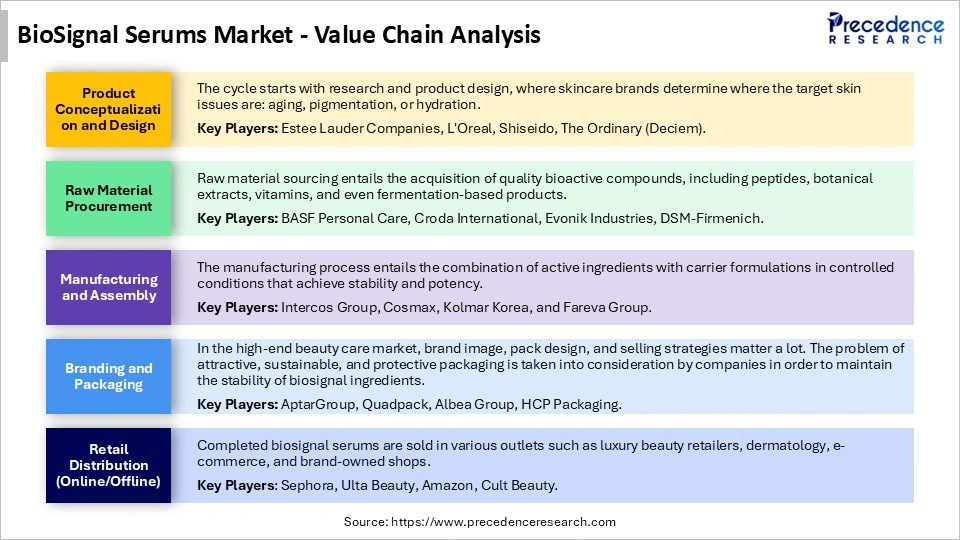
BioSignal Serums Market Value Chain Analysis
BioSignal Serums Market Companies
- L’Oréal S.A.
- Estée Lauder Companies Inc
- Shiseido Company Limited
- Procter & Gamble Co.
- Beiersdorf AG
- Johnson & Johnson
- Amorepacific Corporation
- Galderma S.A.
- DECIEM Beauty Group
- Ourself Skincare
- Skincare Generics
Recent Developments
- In January 2026, Skincare Generics launched Active Pro Serum, a skincare product formulation based on biotechnology and developed to minimize the effects of aging visible on the skin, like wrinkles and loss of skin integrity. It is a combination of peptides, antioxidants, and growth factor-inspired ingredients, which underscores the use of biosignal compounds in next-generation anti-aging serums.
- In December 2025, Moussse released the Hydration Dream Peptide Serum, a skin care product with biosignal-inspired technology, which is designed to enhance skin moisture and the skin barrier. Its serum uses high-quality peptide formulations to build skin strength, which proves the growing popularity of the biotechnology-based formulations in luxurious skin care markets.
- In October 2025, Ourself Skincare introduced a new Complexion Brightening Serum, which is made using the patented MI9 peptide technology. The biosignal-driven formula focuses on discoloration and uneven skin tones and contributes to skin healing and skin regeneration, which is why biotechnology-driven serums are increasingly demanded in the high-end regenerative skincare industry
Segment Covered in the Report
By Product Type
- Anti-Aging Serums
- Skin Brightening Serums
- Hydrating Serums
- Anti-Acne Serums
- Peptide and Active BioSignal Serums
- Others
By Ingredient Type
- Peptides
- Hyaluronic Acid
- Vitamin C and Derivatives
- Retinol (Vitamin A)
- Alpha Hydroxy Acids (AHAs)
- Botanical Bioactives and Plant Extracts
- Other Bioactive Molecules
By Application
- Anti-Aging and Wrinkle Reduction
- Daily Skincare and Hydration
- Pigmentation Treatment
- Acne Treatment
- Professional Dermatology Use
By End User
- E-Commerce Retailers
- Individual Consumers
- Dermatology Clinics and Spas
- Beauty and Personal Care Specialists
- Brick-and-Mortar Retailers and Pharmacies
By Region
- North America
- Latin America
- Europe
- Asia-pacific
- Middle and East Africa
Get Sample Link: https://www.precedenceresearch.com/sample/8111
