
 by
by 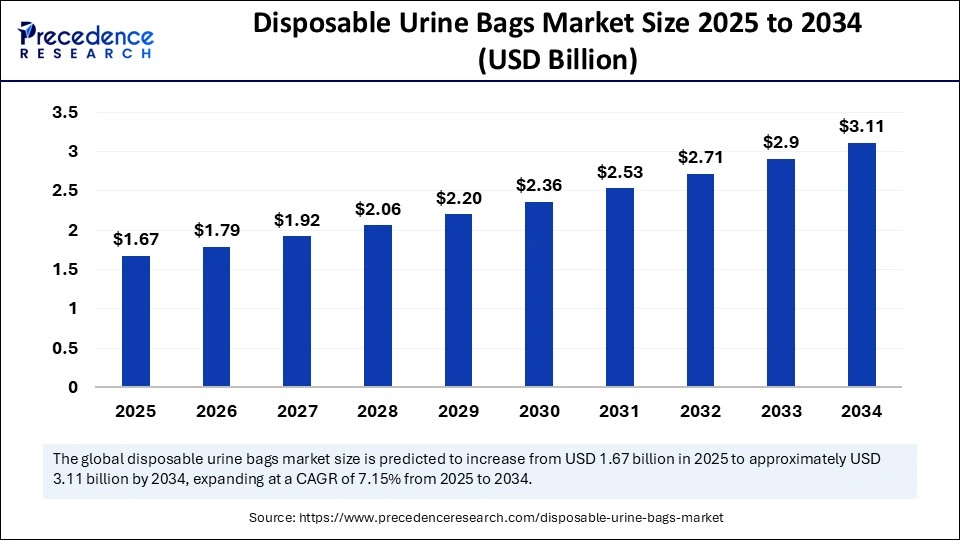
Disposable Urine Bags Market Key Takeaways
- In terms of revenue, the global disposable urine bags market was valued at USD 1.56 billion in 2024.
- It is projected to reach USD 3.11 billion by 2034.
- The market is expected to grow at a CAGR of 7.15% from 2025 to 2034.
- North America dominated the market with the largest market share of 33% in 2024.
- Asia Pacific is expected to grow at the fastest CAGR in the upcoming period.
- By product type, the bedside urine bags segment held the biggest market share of 35% in 2024.
- By product, the leg bags segment is expected to grow at the fastest CAGR during the forecast period.
- By usage type, the single-use segment captured the highest market share of 75% in 2024.
- By usage type, the multi-use (short-term disposable) segment is projected to grow at the fastest CAGR during the forecast period.
- By capacity, the 1000–2000 mL segment contributed the major market share of 48% in 2024.
- By capacity, the above 2000 mL segment is emerging as the fastest growing during the forecast period.
- By material, the polyvinyl chloride (PVC) segment generated the major market share of 60% in 2024.
- By material, the silicone segment is expected to grow at the fastest CAGR during the forecast period.
- By end user, the hospitals segment held the largest share of 40% in 2024.
- By end user, the home care settings segment is expected to grow at the fastest CAGR during the forecast period.
- By distribution channel, the direct tenders segment accounted for the significant market share of 50% in 2024.
- By distribution channel, the online pharmacies/e-commerce segment is expected to grow at the fastest rate over the projection period.
Artificial intelligence is reshaping product innovation in the disposable urine bags market by enhancing design efficiency, functionality, and patient care
AI-powered simulation tools enable manufacturers to optimize product ergonomics, reduce material waste, and shorten prototyping cycles. These tools improve key aspects such as leakage control and material efficiency, leading to better-performing products.
Machine learning algorithms further analyze patient data to uncover unmet needs and user discomfort, guiding the development of more discreet, comfortable, and user-friendly designs—especially beneficial for elderly or immobile users.
Additionally, artificial intelligence is facilitating the integration of smart sensors into urine bags, enabling real-time monitoring of urine output and flow. This provides healthcare professionals with valuable insights into hydration levels, infection risks, and early indicators of complications, supporting proactive clinical decision-making. As demand for intelligent, data-driven medical solutions grows, AI continues to drive innovation in this essential segment of patient care.
Market Overview
The disposable urine bags market encompasses the global industry for single-use urine collection bags designed for hygienic and convenient management of urinary output in individuals with mobility challenges, incontinence, or post-surgical needs. These bags are typically made from medical-grade plastics and are widely utilized across hospitals, clinics, long-term care facilities, and home healthcare settings.
Disposable urine bags are available in various configurations such as bedside bags, leg bags, and wearable options—and often feature anti-reflux valves, graduated volume markings, secure drainage outlets, and leak-proof sealing mechanisms. Their adaptability allows them to be attached to beds, wheelchairs, or limbs, depending on patient mobility and use-case scenarios.
Market growth is primarily fueled by several factors:
-
An aging global population
-
Rising prevalence of urinary incontinence disorders
-
Growing need for post-operative urinary management
-
Increasing adoption of home-based and ambulatory care
-
Technological improvements in product design and patient comfort
As healthcare systems increasingly prioritize portable, hygienic, and user-friendly urinary management solutions, demand for disposable urine bags continues to rise across both developed and emerging markets.
What Trends Are Shaping the Future of the Global Disposable Urine Bags Market?
- Integration of Antimicrobial Features: Manufacturers are increasingly incorporating antimicrobial coatings and materials to reduce the risk of catheter-associated urinary tract infections (CAUTIs), enhancing patient safety and hygiene, particularly in long-term care environments.
- Development of Smart Urine Bags: Innovations in wearable health tech have led to the emergence of smart urine bags equipped with real-time monitoring sensors. These devices can track urine output, flow rate, and detect abnormalities, supporting better clinical decision-making in hospital and home care settings.
- Shift Toward Biodegradable and Eco-Friendly Materials: Environmental concerns are driving the development of disposable urine bags made from biodegradable or recyclable materials. This aligns with growing global demand for sustainable healthcare solutions and regulatory pressure to reduce medical waste.
- Enhanced Patient Comfort and Usability: New designs focus on lightweight, leak-proof, and odor-controlling features, which are particularly valuable in post-operative care and home healthcare. These improvements enhance patient dignity, mobility, and overall comfort.
- Rising Demand for Unisex and Travel-Friendly Options: Consumers are increasingly seeking gender-neutral, discreet, and portable urine bags, especially for travel and outdoor use. This demand is pushing manufacturers to develop more compact and accessible product formats.
- Focus on Accessibility and Inclusive Design: There is a growing emphasis on making urine bags easier to use for individuals with disabilities or limited dexterity. Features like one-hand operation, intuitive connectors, and ergonomic straps are becoming standard.
Disposable Urine Bags Market Key Growth Factors
- Rising Demand for Home Healthcare and Post-Operative Care: The growing shift toward home-based treatment and recovery is increasing the need for hygienic, easy-to-use urine disposal solutions. Disposable urine bags offer enhanced comfort, convenience, and independence for patients recovering from surgery or managing chronic conditions at home.
- Increased Awareness of Hygiene and Infection Control: Heightened awareness around personal hygiene and sanitation—especially in hospitals, eldercare facilities, and long-term care centers is driving the adoption of disposable urine bags. These products help prevent urinary tract infections (UTIs) and other hygiene-related complications.
- Expansion of Healthcare Infrastructure in Emerging Markets: Rapid development of hospitals, clinics, and caregiving facilities in emerging economies is contributing to higher demand for essential hygiene products. Government initiatives and increased healthcare spending are boosting the accessibility and adoption of disposable urine bags in underserved regions.
- Technological Advancements and Product Innovation: Innovations such as leak-proof designs, odor control features, anti-reflux valves, and sensor-enabled smart bags are significantly improving user experience and care outcomes. These advanced functionalities make disposable urine bags more appealing to both patients and healthcare providers.
- Growing Preference for Disposable over Reusable Options: Disposable bags offer greater convenience, eliminate the need for cleaning and sterilization, and significantly reduce the risk of cross-contamination. As infection prevention becomes a top priority in healthcare settings, this preference continues to grow.
Drivers
Growing Geriatric Population and Prevalence of Urinary Incontinence
As the global population continues to age, the incidence of urinary incontinence and mobility challenges is rising sharply. Elderly individuals—particularly those in hospitals, nursing homes, or home care—require reliable and hygienic urine management solutions. Disposable urine bags offer enhanced convenience and lower infection risk compared to reusable alternatives, making them indispensable in geriatric and assisted-living settings. The market is largely fueled by the sustained demand from this expanding demographic.
Rising Awareness of Hygiene and Patient Care
With greater emphasis on infection prevention and personal hygiene, both consumers and healthcare institutions are increasingly opting for disposable medical products. In post-operative care and among bedridden patients, disposable urine bags play a crucial role in minimizing the risk of hospital-acquired infections (HAIs). Government-led hygiene awareness campaigns and health literacy improvements—especially in developing countries—are further accelerating market adoption, particularly in personal and outpatient care segments.
Restraints
Environmental Concerns Related to Plastic Waste
The majority of disposable urine bags are manufactured using non-biodegradable materials like PVC, which contributes significantly to medical plastic waste. Amid growing global pressure to reduce plastic consumption and improve sustainability, healthcare facilities and regulatory bodies are scrutinizing the ecological impact of single-use products. As countries impose stricter regulations on plastic waste—particularly in the medical sector—manufacturers are under increasing pressure to innovate. Without scalable and cost-effective biodegradable alternatives, market growth may be constrained by environmental concerns and compliance challenges.
Limited Awareness and Access in Rural or Underserved Regions
Despite the product’s benefits, adoption remains limited in many low-income and rural regions due to lack of awareness, cultural stigma, and poor healthcare infrastructure. Inadequate distribution networks and high cost sensitivity often lead consumers to favor traditional methods or reusable solutions. Moreover, limited government support and healthcare outreach further restrict product penetration in these markets. Without focused awareness campaigns and improved supply chain access, this large potential user base remains underutilized.
Opportunities
Development of Biodegradable and Eco-Friendly Alternatives
Environmental sustainability is emerging as a key area of opportunity in the disposable urine bags market. Manufacturers are actively exploring biodegradable materials such as plant-based polymers and compostable bioplastics to replace conventional plastic components. These eco-friendly alternatives align with green healthcare initiatives, government regulations, and the growing demand from environmentally conscious consumers. Early adoption and innovation in sustainable product design can offer manufacturers a strong competitive edge and open new markets, especially in Europe and Asia, where regulatory support for green medical products is strong.
Integration of Smart Features for Real-Time Monitoring
The integration of digital health technologies with urine collection products is opening new frontiers for innovation. Smart disposable urine bags embedded with fluid sensors, pH monitors, or wireless connectivity modules enable real-time monitoring of urine volume and composition. These systems can automatically transmit data to electronic health records (EHRs), alert caregivers, and support timely medical interventions. This is particularly valuable in intensive care, elderly care, and remote monitoring scenarios. The fusion of IoT with disposable medical devices offers a high-margin, high-growth opportunity for manufacturers aiming to differentiate through technological innovation.
Disposable Urine Bags Market Key Players
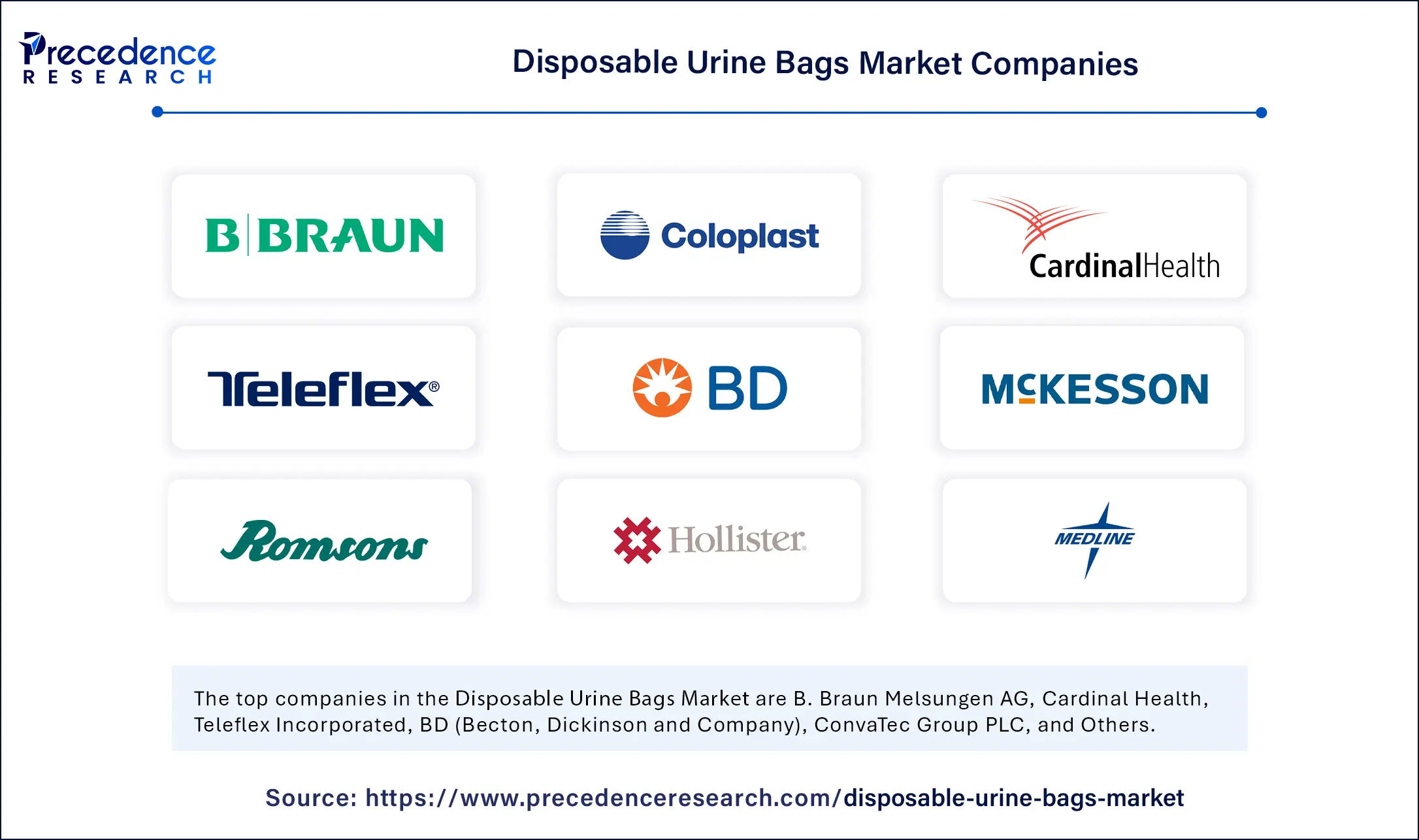
- B. Braun Melsungen AG
- Coloplast A/S
- Cardinal Health
- Teleflex Incorporated
- BD (Becton, Dickinson and Company)
- ConvaTec Group PLC
- Flexicare Medical Limited
- McKesson Medical-Surgical
- Romsons Group of Industries
- Manfred Sauer GmbH
- Hollister Incorporated
- Medline Industries LP
- Medtronic plc
- GPC Medical Ltd
- Apexmed International B.V.
- Urocare Products Inc.
- Covalon Technologies Ltd.
- Plasti-med
- Well Lead Medical Co., Ltd.
- Forlong Medical Co., Ltd.
Segments Covered in the Report
By Product Type
- Leg Bags
- With Anti-Reflux Valve
- Without an Anti-Reflux Valve
- Bedside Bags
- With Drainage Tap
- Without Drainage Tap
- Pediatric Urine Bags
- Adhesive Pediatric Bags
- Non-Adhesive Pediatric Bags
- Others
- Urostomy Bags
- Night Drainage Bags
By Usage Type
- Single-Use
- Multi-Use (Disposable After a Few Uses)
By Capacity
- Below 500 mL
- 500–1000 mL
- 1000–2000 mL
- Above 2000 mL
By Material
- Polyvinyl Chloride (PVC)
- Polyethylene (PE)
- Silicone
- Others
- Thermoplastic Elastomers (TPE)
- Polyurethane
By End User
- Hospitals
- Ambulatory Surgical Centers (ASCs)
- Home Care Settings
- Nursing Homes / Long-Term Care Facilities
- Rehabilitation Centers
- Others
By Distribution Channel
- Direct Tenders
- Retail Pharmacies
- Online Pharmacies / E-commerce
- Distributors / Wholesalers
By Region
- North America
- Europe
- Asia Pacific
- Latin America
- Middle East & Africa
