
 by
by 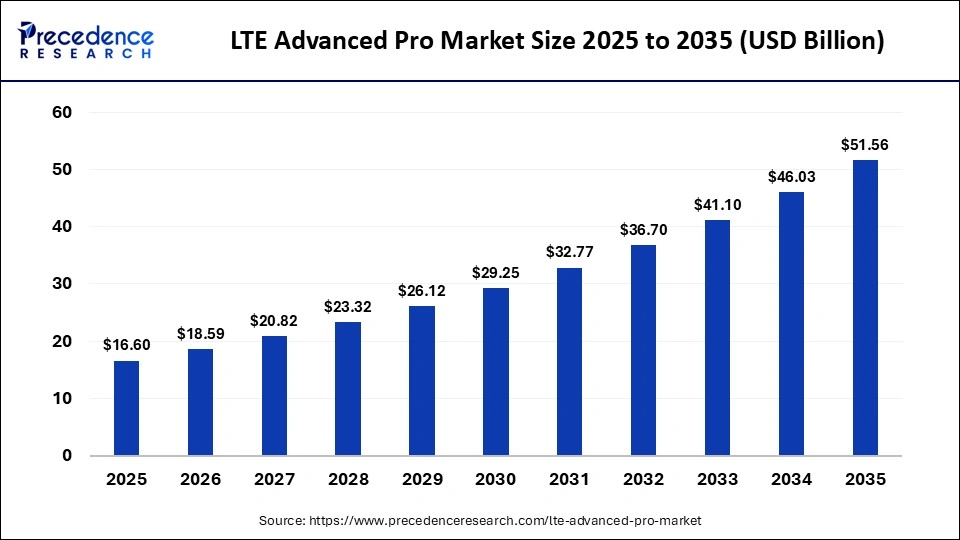
Key Takeaways
- North America led the market in 2025.
- Asia Pacific is expected to grow at a significant CAGR during the forecast period.
- By technology, the carrier aggregation segment held the largest share of the market in 2025.
- By technology, the massive MIMO segment is expected to expand with the highest CAGR during the forecast period.
- By application, the mobile broadband segment dominated the market in 2025.
- By application, the machine-to-machine communication segment is expected to grow at the fastest CAGR during the forecast period.
- By service type, the deployment services segment held the largest share of the market in 2025.
- By service type, the managed services segment is expected to grow at the highest CAGR between 2026 and 2035.
- By end-use, the telecommunications segment held the highest share of the market in 2025.
- By end-use, the consumer electronics segment is expected to grow with the highest CAGR during the forecast period.
Market overview
Long-Term Evolution Advanced Pro (LTE-A Pro) is an enhanced version of the LTE mobile network standard designed to deliver improved network performance, faster data speeds, higher capacity, and wider coverage. This technology introduces advanced features such as carrier aggregation, higher-order multiple-input multiple-output (MIMO), and improved spectral efficiency, enabling mobile networks to provide significantly faster and more reliable wireless connectivity. LTE-A Pro enhances the overall user experience by supporting higher data throughput and improved network stability for a wide range of connected devices.
Key technologies supporting LTE-A Pro include Software Defined Networking (SDN) and Network Function Virtualization (NFV). SDN enables flexible and programmable network management, allowing operators to dynamically configure and monitor network resources for improved efficiency and performance. NFV complements this by virtualizing network functions that traditionally required dedicated hardware, making network deployment more scalable and cost-effective. LTE-A Pro infrastructure can extend from small cells and macro cells to radio access networks (RAN) and distributed antenna systems (DAS). These systems support connectivity across diverse environments including retail spaces, transportation networks, healthcare facilities, residential communities, industrial sectors, and commercial enterprises.
The LTE Advanced Pro market focuses on the deployment of 4.5G or pre-5G connectivity worldwide. Based on 3GPP Releases 13 and 14, LTE-A Pro serves as a technological bridge between 4G and 5G networks. It delivers gigabit-class speeds of up to around 3 Gbps while enabling low-latency communication and improved network capacity. The technology is particularly important for supporting the rapid expansion of Internet of Things (IoT) devices and applications. Increasing adoption of connected devices in industries such as manufacturing, transportation, and smart infrastructure, along with the growing demand for reliable high-speed connectivity in remote and underserved regions, is driving the growth of the LTE Advanced Pro market. As the global telecommunications sector continues to expand, LTE-A Pro is expected to play an important role in strengthening next-generation network capabilities.
How AI is impacting the LTE Advanced Pro market
Artificial intelligence is significantly transforming the LTE Advanced Pro market by enabling more intelligent and automated network operations. AI technologies help telecom operators manage complex network traffic more efficiently by analyzing large volumes of real-time data and predicting network behavior. This allows networks to shift from reactive management to proactive optimization, improving both data speeds and latency performance.
AI-driven analytics can monitor traffic patterns and detect potential bottlenecks before they affect network performance. By automatically adjusting network parameters and allocating resources where needed, AI helps maximize infrastructure efficiency and ensure stable connectivity for users. These capabilities are particularly valuable for emerging applications such as Internet of Things ecosystems and cellular vehicle-to-everything (C-V2X) communication, where reliable and low-latency connectivity is essential.
Artificial intelligence also supports advanced features such as licensed assisted access (LAA), where AI algorithms analyze the usage of unlicensed spectrum and dynamically balance uplink and downlink capacity based on real-time network demand. This improves spectrum utilization and strengthens overall network performance.
In March 2026, Nordic Semiconductor introduced a new range of ultra-low-power cellular IoT solutions designed to support secure LTE connectivity across IoT devices. These solutions integrate edge AI capabilities, allowing devices to process data locally while maintaining efficient communication with LTE networks.
LTE Advanced Pro market trends
- The LTE Advanced Pro market is experiencing several key trends that are shaping its growth. Strategic partnerships are becoming increasingly common, with smartphone manufacturers collaborating with third-party technology providers to enhance LTE-based services and deliver improved mobile internet experiences to users.
- Telecom companies are also launching new service offerings based on 4.5G connectivity, particularly in remote and underserved regions. These initiatives help expand network scalability while strengthening the competitive position of telecom operators in the global market.
- Network expansion remains a major focus for LTE providers as they continue to extend their infrastructure into isolated and rural areas. By expanding coverage, companies aim to provide reliable high-speed internet access and support digital inclusion across different regions.
- In addition, telecom operators are increasing investments in advanced LTE technologies to support the growing demand for remote work, cloud services, and digital connectivity. These investments help improve network reliability, bandwidth capacity, and overall service quality.
- The rising popularity of vehicle-to-everything (V2X) communication is also contributing to the growth of the LTE Advanced Pro market. Countries such as the United States, China, Italy, and the United Arab Emirates are actively adopting V2X technologies, which require high-speed, low-latency connectivity for connected vehicles and intelligent transportation systems.
- Another important trend is the increasing number of smart city initiatives worldwide. Governments across multiple regions are investing in smart infrastructure projects that rely on advanced connectivity technologies, including LTE-A Pro networks, to support applications such as smart transportation, connected utilities, public safety systems, and digital urban services.
Market Scope
| Report Coverage | Details |
| Market Size in 2025 | USD 16.60 Billion |
| Market Size in 2026 | USD 18.59 Billion |
| Market Size by 2035 | USD 51.56 Billion |
| Market Growth Rate from 2026 to 2035 | CAGR of 12.00% |
| Dominating Region | North America |
| Fastest Growing Region | Asia Pacific |
| Base Year | 2025 |
| Forecast Period | 2026 to 2035 |
| Segments Covered | Service Type, Technology, Application, End-Use ,and region |
| Regions Covered | North America, Europe, Asia-Pacific, Latin America, and Middle East & Africa |
Regional Insights
North America holds a significant share of the LTE Advanced Pro market due to the presence of advanced telecommunications infrastructure and strong investments in next-generation networking technologies. The United States and Canada are leading contributors to market growth as telecom operators continuously upgrade their LTE networks to improve speed, capacity, and coverage. The rising demand for high-speed mobile connectivity, expansion of IoT deployments, and increasing adoption of connected vehicles are supporting the development of LTE-A Pro networks across the region. In addition, the presence of major telecom companies and technology providers accelerates innovation and deployment of advanced LTE technologies.
Europe represents a mature and steadily growing market for LTE Advanced Pro technology. Countries such as Germany, the United Kingdom, France, and Italy are actively investing in upgrading existing 4G infrastructure to LTE-A Pro to enhance network efficiency and user experience. Government initiatives promoting digital transformation and smart infrastructure are also supporting the adoption of advanced mobile network technologies. The increasing use of IoT devices in industries such as manufacturing, logistics, and healthcare is further driving demand for reliable high-speed connectivity across the region.
Asia-Pacific is expected to witness the fastest growth in the LTE Advanced Pro market due to rapid expansion of the telecommunications sector and the large population base requiring high-speed mobile connectivity. Countries such as China, Japan, South Korea, and India are leading the regional market with significant investments in telecom infrastructure and mobile broadband services. The growing adoption of smartphones, rising demand for digital services, and increasing deployment of IoT devices across industries are major factors driving market growth. Additionally, governments in the region are actively promoting smart city projects and digital transformation initiatives, which further increases the demand for advanced LTE network technologies.
The LTE Advanced Pro market in Latin America is gradually expanding as telecom operators upgrade their network infrastructure to improve internet connectivity and coverage. Countries such as Brazil, Mexico, and Argentina are key markets where mobile network providers are deploying advanced LTE technologies to support the growing demand for high-speed data services. The expansion of mobile broadband, rising smartphone penetration, and increasing adoption of digital services are contributing to market growth across the region. Government efforts to improve connectivity in rural and underserved areas are also encouraging telecom companies to expand LTE-A Pro network deployments.
The Middle East and Africa region is witnessing steady growth in the LTE Advanced Pro market as governments and telecom operators invest in modern telecommunications infrastructure. Countries such as the United Arab Emirates, Saudi Arabia, and South Africa are leading the adoption of advanced LTE technologies to enhance mobile network performance and support digital transformation initiatives. Increasing demand for reliable connectivity, expansion of smart city projects, and growing adoption of IoT solutions are driving the deployment of LTE-A Pro networks across the region. As digital connectivity continues to improve, the demand for high-speed mobile networks is expected to rise in the coming years.
LTE Advanced Pro Market Companies
- Qualcomm (U.S.)
- Huawei (CN)
- Ericsson (SE)
- Cisco (U.S.)
- Intel (U.S.)
- AT&T (U.S.)
- Verizon (U.S.)
- Nokia (FI)
- Samsung (KR)
- ZTE (CN)
Recent Developments
- In March 2026, Nordic Semiconductor launched a new range of advanced LTE-M/NB-IoT service. This connectivity is designed to enhance connectivity across numerous IoT devices.
- In December 2025, Ethio Telecom launched a high-speed 4G LTE advanced service. This service is designed to deliver high-speed internet in several towns, such as Nkemt, Sire, Gute, Bako, Ano, Arjo, Nejo, Dembi Dolo, and Gimbi.
- In March 2025, Pro-M Zrt launched a public safety mobile broadband network. This network is based on advanced LTE technology designed to cater to consumers across Hungary.
- In June 2025, Nokia Corporation partnered with e& UAE and MediaTek, Inc. and showcased six component carrier aggregation (6CC) on mid-band spectrum with a successful demonstration. This accomplishment allows for multiple gigabit throughput which enables gigabit LTE-A Pro to coexist and accommodate new 5G designs.
- In February 2025, Ericsson unveiled Massive MIMO and programmable RAN radios to ensure network robustness, as well as new products. These additions enable operators, in a broader evolution of radio technology, to provide more tools to enhance the performance of LTE Advanced Pro.
Segments Covered in the Report
By Service Type
- Deployment Services
- Managed Services
- Consulting Services
By Technology
- Carrier Aggregation
- Massive MIMO
- Network Slicing
- Ultra-Reliable Low-Latency Communication
By Application
- Mobile Broadband
- Machine-to-Machine Communication
- Public Safety
- Fixed Wireless Access
By End-Use
- Consumer Electronics
- Automotive
- Smart Cities
- Telecommunications
By Region
- North America
- Latin America
- Europe
- Asia-pacific
- Middle and East Africa
Get Sample Link: https://www.precedenceresearch.com/sample/8113
