
 by
by 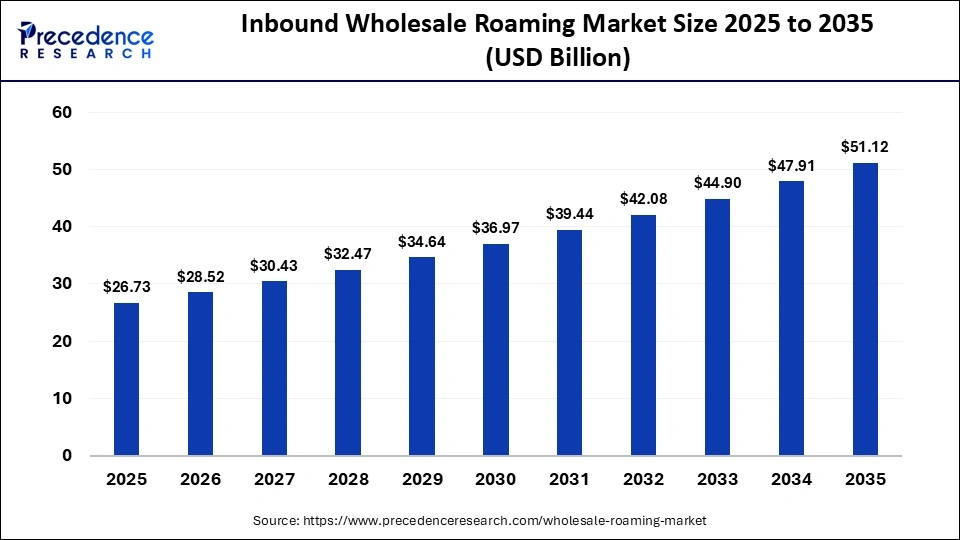
Key Takeaways
- North America dominated the global market in 2025.
- Europe is expected to be the fastest-growing region over the forecast period.
- By type of services, the data roaming segment held a dominant position in the market in 2025.
- By type of services, the voice roaming segment is expected to grow rapidly in the forecast period.
- By end-user, the mobile network operators (MNOs) segment held the largest revenue share of the market in 2025.
- By end-user, the mobile virtual network operators (MVNOs) segment is expected to be the fastest-growing segment in the market in the coming years.
- By technology, the 4G segment contributed the biggest market share in 2025.
- By technology, the 5G segment is expected to expand rapidly over the forecast period of 2026 to 2035.
Market Overview
The inbound wholesale roaming market refers to agreements between telecommunications operators that enable seamless mobile connectivity for international visitors using foreign networks. Through these partnerships, operators provide network access, billing coordination, authentication, and technical interoperability to ensure uninterrupted voice, SMS, and mobile data services for roaming subscribers.
Wholesale roaming operates on inter-operator agreements where pricing, traffic settlements, and usage terms are negotiated at the carrier level. Core components of this ecosystem include inter-operator billing management, fraud prevention systems, traffic steering, network optimization, and regulatory compliance. These mechanisms ensure operational efficiency while maintaining service quality and revenue assurance.
As global travel, cross-border commerce, and digital mobility continue to expand, operators are investing in broader network coverage, lower latency performance, and optimized cost structures. The evolution of 4G LTE and 5G technologies, alongside the rapid adoption of eSIM and cloud-based roaming platforms, is reshaping the competitive landscape. These advancements enable scalable, high-performance roaming services while improving customer experience and unlocking new revenue streams for mobile network operators.
Impact of Artificial Intelligence in the Inbound Wholesale Roaming Market
Artificial Intelligence (AI) is transforming inbound wholesale roaming by enhancing traffic forecasting, automation, fraud detection, and customer experience management. AI-driven analytics platforms process historical roaming usage data, global travel trends, and subscriber behavior patterns to accurately predict future roaming traffic volumes. This enables telecom operators to optimize network capacity planning, pricing strategies, and inter-operator agreements.
AI also strengthens customer support capabilities. International roaming often involves real-time issues related to billing discrepancies, service interruptions, and network configuration challenges. AI-powered chatbots and virtual assistants can resolve common queries instantly, reducing response times and easing the burden on support teams.
On the operational side, AI combined with machine learning (ML) and Self-Organizing Networks (SON) enhances automated network optimization. Instead of relying solely on manual traffic control processes, operators can leverage AI to dynamically manage roaming traffic flows, reduce latency, prevent congestion, and improve service reliability across borders. This automation improves user experience while maximizing operational efficiency.
Trends Influencing the Inbound Wholesale Roaming Market
- 5G Roaming Reshaping Global Connectivity: The deployment of 5G Standalone (SA) roaming is redefining wholesale connectivity models. Unlike traditional roaming upgrades, 5G enables differentiated service tiers, guaranteed service-level agreements (SLAs), network slicing, and ultra-low latency performance. For carriers, 5G roaming represents a tangible revenue opportunity as enterprise users and high-value consumers increasingly demand premium, high-speed connectivity while traveling internationally.
- eSIM Driving Seamless International Access: The rapid growth of eSIM technology is eliminating reliance on physical SIM card swaps and complex activation processes. Travelers and IoT operators can remotely download and activate carrier profiles, allowing instant network switching across countries. This enhances roaming flexibility, reduces churn, shortens onboarding cycles between operators, and expands roaming footprints globally.
- IoT Roaming Fueling Cross-Border Data Expansion: Wholesale roaming is extending beyond consumer smartphones to support industrial IoT devices, automotive telematics systems, logistics trackers, and connected infrastructure. As these devices operate across multiple countries, they generate continuous, high-volume data traffic. Operators are therefore designing customized roaming packages tailored for mission-critical applications, emphasizing network reliability, data resilience, service availability, and cross-system interoperability.
Market Scope
| Report Coverage | Details |
| Market Size in 2025 | USD 26.73 Billion |
| Market Size in 2026 | USD 28.52 Billion |
| Market Size by 2035 | USD 51.12 Billion |
| Market Growth Rate from 2026 to 2035 | CAGR of 6.70% |
| Dominating Region | North America |
| Fastest Growing Region | Europe |
| Base Year | 2025 |
| Forecast Period | 2026 to 2035 |
| Segments Covered | Type of Services, End-User, Technology, and region |
| Regions Covered | North America, Europe, Asia-Pacific, Latin America, and Middle East & Africa |
Regional Insights
North America represents a technologically advanced inbound wholesale roaming market, driven by strong international travel flows and high mobile data consumption. The United States and Canada benefit from well-established roaming partnerships with European and Asia Pacific operators. The rapid rollout of 5G Standalone (SA) networks and network slicing capabilities is enhancing premium roaming offerings for enterprise and high-value customers. Additionally, increasing adoption of eSIM technology in smartphones and connected devices is strengthening seamless cross-border connectivity across the region.
Europe remains one of the most mature roaming markets globally, supported by extensive cross-border mobility and regulatory harmonization. While the European Union’s “Roam Like at Home” framework has reshaped retail roaming within member states, wholesale roaming agreements continue to play a critical role in managing inbound traffic from non-EU regions. Strong 5G deployment, cloud-native core networks, and growing IoT roaming use cases are driving innovation. Europe also leads in fraud management systems and inter-operator billing standardization.
Asia Pacific is projected to experience significant growth in inbound wholesale roaming, fueled by rising tourism, business travel, and expanding digital economies. Countries such as China, Japan, South Korea, Singapore, and Australia are investing heavily in 5G infrastructure, enhancing roaming performance and coverage. The region also benefits from a rapidly expanding IoT ecosystem, including smart cities, connected vehicles, and industrial automation systems. Increasing adoption of eSIM and cloud-based roaming platforms is further streamlining operator partnerships and traffic management.
Recent Developments
- In August 2025, Ncell, a Nepalese telco, announced the expansion of its Voice over Long-Term Evolution (VoLTE) international roaming service to include outbound travelers. The company now offers both inbound and outbound VoLTE roaming for its customers, enabling them to experience HD voice calls and high-speed data services when traveling abroad.
- In February 2025, telecom players across the Gulf region started adjusting their roaming strategies to enhance the quality of service for inbound roamers. As roaming surged in destinations like the U.A.E., Saudi Arabia, Kuwait, and Qatar, operators began revising agreements, introducing tiered speed-based tariffs, and reducing speed caps that previously throttled performance for international visitors.
Segments Covered in the Report
By Type of Services
- Voice Roaming
- Data Roaming
- Messaging Roaming
- Enterprise Roaming
- Wholesale Roaming
By End-User
- Mobile Network Operators (MNOs)
- Mobile Virtual Network Operators (MVNOs)
- Telecom Service Providers
- Enterprises
- Retail Customers
By Technology
- 2G
- 3G
- 4G
- 5G
- Wi-Fi Offloading
By Region
- North America
- Europe
- Asia-Pacific
- Latin America
- Middle East & Africa
Get Sample Link: https://www.precedenceresearch.com/sample/7937
