
 by
by The global robotic refueling system market is witnessing explosive growth as industries increasingly deploy AI-powered fueling automation technologies to improve operational safety, efficiency, and workforce optimization. The rapid expansion of electric vehicle infrastructure, hydrogen fueling ecosystems, aerospace automation, and autonomous fleet operations is creating strong demand for intelligent robotic refueling systems worldwide.
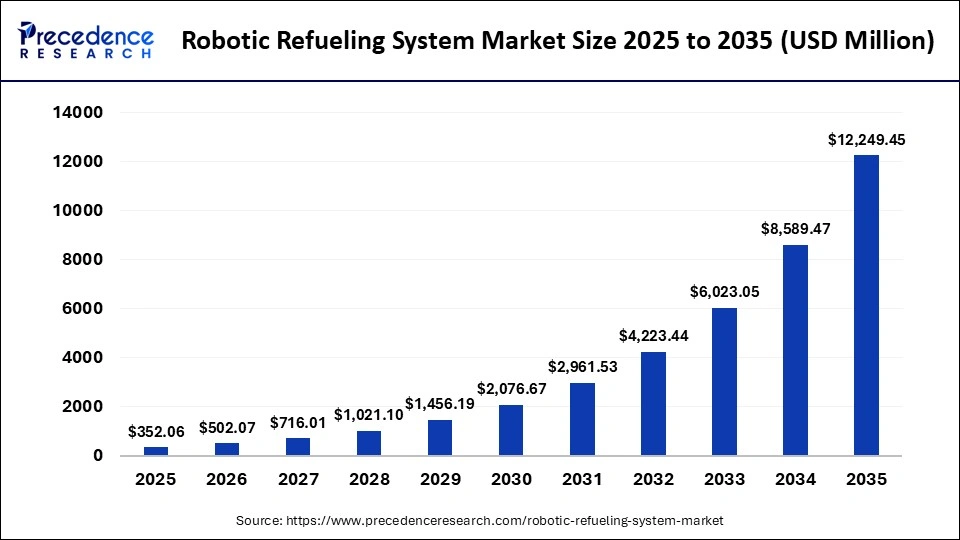
According to Precedence Research, the global robotic refueling system market size was valued at USD 352.06 million in 2025 and is projected to increase from USD 502.07 million in 2026 to approximately USD 12,249.45 million by 2035, growing at an exceptional CAGR of 42.61% from 2026 to 2035. Increasing demand for contactless fueling operations, labor cost reduction, operational safety, and automation across airports, military facilities, and commercial fuel stations is significantly fueling market expansion.
Quick Insights: What Are the Major Highlights of the Robotic Refueling System Market?
- North America accounted for the largest market share of 43% in 2025 due to strong investments in defense automation and autonomous fueling infrastructure.
- Asia-Pacific is expected to witness the fastest CAGR during the forecast period owing to rising industrial automation and electric mobility adoption.
- The hydrogen segment dominated the market in 2025 because of increasing investments in hydrogen-powered transportation infrastructure.
- Fully automated systems held the dominant market share due to rising demand for contactless and AI-enabled fueling operations.
- Aerospace emerged as the leading application segment because of growing deployment of robotic aircraft refueling systems.
- The marine segment is expected to grow at the highest CAGR due to increasing automation across maritime fuel handling operations.
- Commercial end users accounted for the highest market share in 2025, while military applications are expected to grow rapidly through 2035.
- Major industry players include ABB Ltd., KUKA AG, Rotec Engineering B.V., Fuelmatics AB, Airbus SE, FANUC Corporation, and Sandvik AB.
Read Also: Machine Automation Controller Market
How Is Artificial Intelligence Transforming the Robotic Refueling System Market?
Artificial intelligence is playing a transformative role in robotic fueling operations by enabling autonomous nozzle alignment, real-time safety monitoring, predictive maintenance, and intelligent fueling optimization. AI-powered robotic arms equipped with advanced sensors and computer vision technologies can accurately identify fuel ports and execute fueling operations without human intervention.
AI is also significantly enhancing operational safety across high-risk environments such as military airbases, airports, marine terminals, and hydrogen fueling stations. Intelligent systems can rapidly detect smoke, fuel leaks, abnormal temperatures, and fire hazards while initiating emergency shutdown procedures automatically. These capabilities are becoming critical as industries prioritize safer and more efficient fueling ecosystems.
Additionally, AI-enabled predictive analytics platforms help optimize fuel delivery routes, reduce downtime, and improve fleet management efficiency. In March 2026, NextNRG launched an AI-driven platform designed to improve automated EV refueling and charging efficiency, highlighting the growing convergence of AI and fueling automation technologies.
What Are the Key Growth Drivers Fueling the Robotic Refueling System Market?
Why Is EV Adoption Accelerating Demand for Robotic Refueling Systems?
The rapid increase in electric vehicle adoption is significantly boosting demand for automated charging and robotic fueling systems capable of handling higher charging volumes safely and efficiently. According to industry statistics, around 1.2 million electric vehicles were sold in the U.S. during 2024, driving strong momentum in autonomous fueling infrastructure development.
How Is Automation Improving Fueling Safety?
Robotic refueling systems are increasingly being adopted to minimize worker exposure to hazardous environments involving combustible fuels and chemicals. Automated systems help reduce human error, improve fueling precision, and enhance workplace safety.
Why Are Autonomous Fleets Creating New Opportunities?
The rapid deployment of autonomous vehicles across logistics, mining, transportation, and defense industries is creating substantial demand for intelligent fueling infrastructure capable of supporting continuous autonomous operations.
How Are Government Initiatives Supporting Market Expansion?
Governments across developed economies are actively supporting industrial automation, clean energy, and smart infrastructure initiatives aimed at enhancing worker safety, reducing emissions, and modernizing fueling ecosystems.
What Emerging Opportunities Are Reshaping the Robotic Refueling System Market?
Can Autonomous Refueling Stations Revolutionize Fuel Retailing?
Yes. Petroleum companies are increasingly investing in autonomous fueling stations equipped with robotic fueling systems to reduce labor dependency and improve customer convenience. Countries such as China and Japan are actively expanding automated fueling infrastructure.
How Are Dual-Arm Refueling Robots Expanding Market Potential?
The development of dual-arm robotic fueling systems is creating major operational advantages by enabling simultaneous handling of multiple fuel nozzles. These advanced systems significantly improve fueling speed, efficiency, and throughput for high-volume applications such as airports, industrial facilities, and commercial fleet operations.
Will Military Automation Become a Major Revenue Driver?
Defense organizations worldwide are increasingly deploying autonomous ground refueling systems to improve operational safety and mission readiness. Automated fueling technologies help reduce personnel exposure in combat zones and hazardous military environments.
Which Regions Are Leading the Robotic Refueling System Market?
Why Did North America Dominate the Market?
North America captured the largest market share in 2025 due to strong deployment of autonomous refueling drones, growing defense modernization initiatives, and increasing adoption of electric and hydrogen-powered transportation systems. The region is home to several major automation and aerospace technology companies actively investing in robotic fueling solutions.
U.S. Market Trends
The United States remains a major contributor to regional growth owing to rapid adoption of advanced automation technologies across airports, military bases, and commercial fueling infrastructure. Strong government support for clean energy, hydrogen infrastructure, and EV charging systems is further accelerating demand.
Why Is Asia-Pacific Expanding at the Fastest CAGR?
Asia-Pacific is projected to witness the fastest growth during the forecast period because of increasing automation across refueling infrastructure, growing fuel-cell vehicle adoption, and expanding industrial robotics deployment. The rapid modernization of aviation, logistics, and marine transportation sectors is significantly contributing to regional market expansion.
China Market Trends
China continues leading regional growth due to increasing deployment of battery electric vehicles, industrial automation technologies, and marine transportation infrastructure modernization. Rising investments in military automation programs are also contributing to market demand.
Which Segments Are Driving Revenue Growth Across the Market?
Why Did the Hydrogen Segment Dominate the Market?
The hydrogen segment accounted for the largest market share in 2025 because hydrogen fueling requires highly precise automated handling to ensure safety and prevent leaks. Robotic fueling systems provide secure, accurate, and efficient fueling operations critical for hydrogen-powered transportation systems. Growing government support for clean energy initiatives is further accelerating demand.
Why Is Electricity Emerging as the Fastest-Growing Fuel Segment?
The electricity segment is expected to expand at the fastest CAGR because of rising EV adoption and increasing investments in automated EV charging infrastructure. Robotic charging systems help reduce human intervention while improving charging speed and reliability.
Why Did Fully Automated Systems Lead the Market?
Fully automated systems dominated the market in 2025 due to their ability to provide contactless, high-precision fueling operations using advanced robotics and intelligent sensors. These systems improve safety, reduce labor costs, and minimize operational errors across industrial fueling environments.
Why Are Semi-Automated Systems Growing Rapidly?
Semi-automated systems are expected to witness strong growth because they offer an effective balance between automation and operational efficiency. Fleet operators increasingly deploy semi-automated fueling solutions to reduce manual effort while maintaining cost efficiency.
Why Did Aerospace Dominate the Application Segment?
The aerospace segment accounted for the largest market share in 2025 because airports, military airbases, and aerospace maintenance facilities increasingly require automated fueling technologies to improve operational efficiency and reduce aircraft turnaround times.
How Is the Marine Sector Emerging Rapidly?
The marine segment is expected to grow significantly because automated fueling systems improve nozzle positioning accuracy and controlled fuel flow during maritime refueling operations, enhancing safety and operational precision.
What Recent Developments Are Reshaping the Industry?
Astroscale Launches REFLEX-J Refueling Spacecraft
In September 2025, Astroscale launched REFLEX-J, a robotic refueling spacecraft equipped with advanced robotics and computer vision systems designed for chemical refueling operations in low Earth orbit.
Boeing Introduces Advanced Aerial Refueling Systems
In April 2025, Boeing launched a new generation of aerial refueling systems designed for the U.S. Air Force, highlighting growing military investments in autonomous fueling technologies.
Autonomous Fuel Stations Gain Momentum
In September 2025, Galnaftogaz opened a staff-free refueling station in Ukraine designed to reduce dependence on manual labor and improve fueling efficiency.
What Challenges Are Limiting Market Growth?
Despite exceptional growth potential, high deployment and maintenance costs remain major barriers for widespread adoption. Advanced robotic fueling systems require substantial investments in infrastructure, robotics hardware, AI software integration, and safety systems.
Cybersecurity risks associated with connected fueling infrastructure also remain an important operational challenge. Integrating advanced robotic systems with legacy fueling infrastructure can create additional technical complexities for operators.
Case Study: How Airports Are Using Robotic Refueling Systems to Improve Efficiency
Several international airports are increasingly deploying AI-powered robotic fueling systems to automate aircraft refueling procedures. These systems utilize computer vision, robotic arms, and intelligent sensors to execute precise fueling operations without manual intervention.
The deployment of robotic fueling technologies helps airports improve operational safety, reduce aircraft turnaround times, minimize labor dependency, and enhance fueling consistency while meeting strict aviation safety standards.
Conclusion: Why Is the Robotic Refueling System Market Entering a High-Growth Automation Era?
The robotic refueling system market is entering a transformative growth phase fueled by AI innovation, autonomous mobility expansion, hydrogen infrastructure development, and industrial automation investments worldwide.
As industries continue prioritizing operational efficiency, workforce safety, autonomous transportation, and sustainable fueling ecosystems, robotic refueling systems are expected to become critical technologies supporting the next generation of transportation, aerospace, defense, and industrial infrastructure.
Get a Sample Copy: https://www.precedenceresearch.com/sample/8230
For inquiries regarding discounts, bulk purchases, or customization requests, please contact us at [email protected]
