
 by
by The US cardiovascular drugs market is witnessing significant growth due to the increasing prevalence of cardiovascular diseases, aging population, rising adoption of precision medicine, and continuous advancements in novel therapeutics. Artificial intelligence, digital health technologies, and targeted therapies are further transforming the landscape of cardiovascular care.
US Cardiovascular Drugs Market Size and Forecast
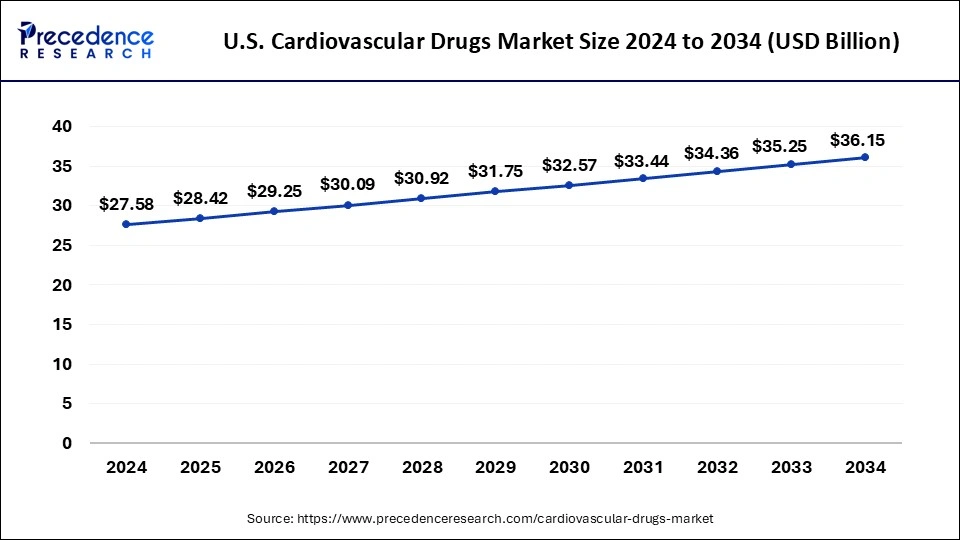
The US cardiovascular drugs market size accounted for USD 28.42 billion in 2025 and is predicted to increase from USD 29.25 billion in 2026 to approximately USD 37.03 billion by 2035, expanding at a CAGR of 2.68% from 2026 to 2035. The market is witnessing substantial growth, mainly driven by the increasing prevalence of hypertension and heart failure, paired with a high demand for convenient oral medications and next-generation combination therapies that enhance patient compliance.
Market Highlights
- Based on drug type, the anticoagulants segment dominated the market in 2025, supported by the increasing prevalence of cardiovascular disorders and the growing use of blood-thinning therapies to prevent stroke and thrombotic complications.
- The antihypertensive segment is anticipated to witness the fastest growth from 2026 to 2035, driven by the rising incidence of hypertension and increasing awareness regarding early disease management.
- By disease indication, the hypertension segment captured the largest share of the market in 2025, owing to the high global burden of the condition and the growing demand for long-term treatment options.
- The arrhythmias segment is expected to register strong growth during the forecast period, fueled by advancements in diagnosis and the increasing adoption of targeted therapies for rhythm disorders.
- In terms of route of administration, the oral segment accounted for the largest market share in 2025, primarily due to its convenience, better patient compliance, and widespread availability of oral medications.
- The parenteral segment is projected to expand at the fastest rate between 2026 and 2035, supported by the increasing use of injectable therapies in acute and critical care settings.
- Based on distribution channel, retail pharmacies held the leading market share in 2025, benefiting from their extensive reach and easy access to prescription medications for patients.
- Hospital pharmacies are expected to witness significant growth over the forecast period, driven by rising hospital admissions, growing demand for specialized treatments, and the increasing availability of advanced cardiovascular drugs in healthcare facilities.
What is Driving the Growth of the U.S. Cardiovascular Drugs Market?
The U.S. cardiovascular drugs market comprises pharmaceuticals used for the prevention and treatment of heart diseases, including hypertension, coronary artery disease, heart failure, arrhythmias, and hyperlipidemia. Cardiovascular diseases remain one of the leading causes of mortality in the United States, creating a strong demand for innovative and effective therapies.
Growing incidence of obesity, diabetes, hypertension, and sedentary lifestyles has increased the burden of cardiovascular disorders. In addition, rising healthcare expenditures, increasing awareness regarding early diagnosis, and the availability of advanced treatment options are supporting market expansion.
Pharmaceutical companies are also investing heavily in next-generation therapies, biologics, and personalized medicines to address unmet clinical needs and improve patient outcomes.
How is Artificial Intelligence Transforming the U.S. Cardiovascular Drugs Market?
Artificial Intelligence (AI) is revolutionizing cardiovascular care by enhancing drug discovery, risk prediction, diagnosis, and personalized treatment strategies.
AI-powered algorithms analyze patient data, imaging studies, and genetic information to identify individuals at high risk of cardiovascular events. Machine learning models are helping researchers accelerate drug discovery by predicting therapeutic responses and optimizing clinical trial design.
Wearable devices integrated with AI enable continuous monitoring of heart rhythms and vital signs, facilitating early intervention and improving disease management. AI-driven analytics are also supporting precision medicine approaches and improving treatment adherence among patients.
What are the Major Trends Influencing the U.S. Cardiovascular Drugs Market?
- Increasing Adoption of Precision Medicine: Precision medicine is gaining traction as genomic profiling and biomarker-based therapies enable personalized treatment strategies for cardiovascular diseases.
- Rising Demand for PCSK9 Inhibitors: PCSK9 inhibitors are increasingly being adopted to manage cholesterol levels in patients who do not respond adequately to conventional statin therapies.
- Expansion of Combination Therapies: Combination drug therapies are becoming popular for managing hypertension and heart failure, offering enhanced efficacy and improved patient compliance.
- Growing Utilization of Digital Health Technologies: Digital therapeutics, remote monitoring solutions, and wearable devices are improving disease management and supporting preventive cardiovascular care.
- Development of RNA-Based Therapies: Innovations in RNA therapeutics and gene-editing technologies are opening new opportunities for treating inherited cardiovascular disorders.
What are the Segment Insights of the U.S. Cardiovascular Drugs Market?
By Drug Class
The antihypertensive drugs segment accounted for the largest market share owing to the high prevalence of hypertension among the U.S. population. Meanwhile, the lipid-lowering drugs segment is expected to witness substantial growth due to increasing awareness regarding cholesterol management.
By Disease Indication
The hypertension segment dominated the market due to the widespread occurrence of high blood pressure. However, the heart failure segment is anticipated to experience robust growth driven by increasing diagnosis rates and the introduction of innovative therapies.
By Route of Administration
The oral drugs segment held the largest share because of ease of administration and widespread patient preference. Injectable therapies are expected to gain momentum with the introduction of biologics and advanced targeted treatments.
By Distribution Channel
Hospital pharmacies represented a significant revenue share due to the growing number of cardiovascular procedures and inpatient treatments. Retail pharmacies and online pharmacies are also witnessing increasing adoption owing to enhanced accessibility and convenience.
Who are the Key Players Operating in the U.S. Cardiovascular Drugs Market?
Major companies operating in the market include:
- Pfizer Inc.
- Johnson & Johnson
- Merck & Co., Inc.
- Bristol Myers Squibb
- AstraZeneca PLC
- Novartis AG
- Amgen Inc.
- Eli Lilly and Company
- Sanofi S.A.
- Bayer AG
- Boehringer Ingelheim
- Abbott Laboratories
- GSK plc
- Daiichi Sankyo Company, Limited
- Novo Nordisk A/S
These companies are focusing on strategic collaborations, product launches, clinical trials, and acquisitions to strengthen their market positions and expand their cardiovascular portfolios.
What Does the Future Hold for the U.S. Cardiovascular Drugs Market?
The future of the U.S. cardiovascular drugs market will be shaped by advancements in precision medicine, artificial intelligence, digital therapeutics, and gene-based therapies. The integration of real-world evidence, biomarker-driven drug development, and remote patient monitoring technologies is expected to accelerate innovation.
Increasing emphasis on preventive healthcare and personalized treatment approaches will further create opportunities for pharmaceutical manufacturers and healthcare providers.
Why is the U.S. Cardiovascular Drugs Market Expected to Witness Strong Growth?
The market is benefiting from the rising prevalence of cardiovascular diseases, continuous advancements in drug development, and growing investments in innovative therapies. As AI-powered healthcare solutions and precision medicine become increasingly mainstream, the U.S. cardiovascular drugs market is expected to experience sustained growth over the next decade.
Get Sample Link : https://www.precedenceresearch.com/sample/8470
Recent Developments
- In May 2026, AstraZeneca’s Baxfendy (baxdrostat) received FDA approval as a first-in-class aldosterone synthase inhibitor for treating hypertension when used with other medications. Hypertension is a cardiovascular risk factor that contributes to numerous deaths and disabilities by inhibiting aldosterone production, helping lower blood pressure, and reducing the risk of heart and kidney issues.
- In June 2026, Cosmos Health Inc. launched Oliv18™, a nutraceutical made from a whole-olive polyphenol extract sourced from Moroccan olive trees. The extract is USDA and EU organic certified, produced without solvents, and standardized for hydroxytyrosol and oleuropein. A daily dose of Oliv18™ is equivalent to about 11 teaspoons of extra virgin olive oil.
Segments Covered in the Report
By Drug Type
- Antihypertensive
- Anticoagulants
- Antihyperlipidemic
- Antiplatelet Drugs
- Others
By Disease Indication
- Hypertension
- Coronary Artery Disease
- Hyperlipidaemia
- Arrhythmia
- Others
By Route of Administration
- Oral
- Parenteral
- Others
By Distribution Channel
- Hospital Pharmacies
- Online Pharmacies
- Retail Pharmacies
- Others
Also Read Our Latest Article : Cloud Cost Management Market
