
 by
by 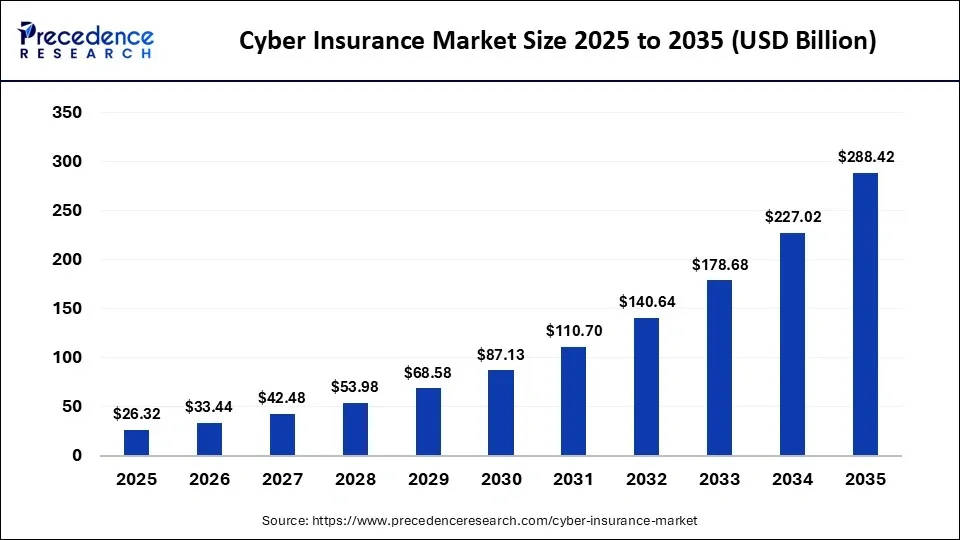
Key Takeaways
- By region, North America dominated the cyber insurance market with a market share of 36.4% in 2025.
- By region, Asia-Pacific is fastest growing region in the cyber insurance market in the forecast period.
- By insurance type, the standalone cyber insurance segment dominated in the cyber insurance market with 58.6% market share in 2025.
- By insurance type, the packaged or endorsed segment is growing at a rapid pace during the forecast period.
- By coverage type, the first-party coverage segment is dominant with a market share of 54.0% in 2026.
- By coverage type, the liability/third-party coverage segment is expected to record the highest CAGR during the forecast period
- By organization size, large enterprises held dominance over policyholders with 54.0% of the market share in 2025.
- By organization size, the SMEs segment is growing rapidly with a CAGR of 29% or more in the forecast period of 2026 to 2035.
- By end-user, the BFSI segment dominated the market with the largest market share, approximately 32.0% in 2025.
- By end-user, the healthcare segment is growing rapidly with a CAGR of approximately 30% or more in the forecast period.
What is the Cyber Insurance Market?
The cyber insurance market consists of insurance solutions designed to protect businesses and individuals from financial losses caused by cyber incidents and digital security breaches. As organizations increasingly rely on digital infrastructure, they face growing risks from ransomware attacks, data breaches, phishing, and other forms of cybercrime. Cyber insurance policies help mitigate these risks by covering expenses such as data recovery, legal fees, regulatory penalties, incident response, and business interruption losses.
Cyber insurance has become a critical component of modern risk management strategies. With the expansion of data protection and privacy regulations worldwide, organizations are subject to stricter compliance requirements and significant financial penalties for violations. Cyber insurance helps organizations manage these regulatory and operational risks by providing financial protection and support during cyber incidents. As cyber threats continue to evolve, demand for comprehensive coverage is increasing across industries.
Impact of AI on the Cyber Insurance Market
The rapid advancement of Artificial Intelligence (AI) is introducing new complexities and risks within the cyber insurance landscape. AI systems can create emerging vulnerabilities, including algorithmic errors, data integrity failures, and unintended autonomous system behavior. These risks present challenges for insurers, as traditional cyber insurance policies were not originally designed to address AI-related liabilities.
As a result, many insurers are reassessing coverage terms and introducing limitations related to AI-driven risks. Issues such as AI hallucinations, biased decision-making, and system malfunctions can lead to operational disruptions, financial losses, and reputational damage. In some cases, insurers are shifting responsibility for certain AI-related incidents to Errors and Omissions (E&O) policies rather than standard cyber coverage. As AI adoption accelerates, insurers and organizations alike are adapting their risk assessment models and coverage frameworks to address this rapidly evolving threat environment.
Market Trends in the Cyber Insurance Market
- Growing Adoption of Cryptocurrency-Related Insurance: As cryptocurrency ownership expands globally, so do the associated cybersecurity risks. Organizations dealing with digital assets are increasingly seeking specialized cyber insurance coverage to protect against threats such as custodial theft, smart contract vulnerabilities, and cryptocurrency exchange outages. This trend reflects the growing integration of blockchain risk management into cyber insurance offerings, as insurers adapt policies to address the unique security challenges of digital assets.
- Integration of Cybersecurity Services with Insurance Coverage: Insurers are increasingly combining cyber insurance policies with proactive cybersecurity services to reduce risk and improve incident response. These integrated offerings may include vulnerability assessments, threat intelligence monitoring, real-time security alerts, and incident response support. By leveraging real-time security data, insurers can better assess risk exposure and, in some cases, adjust premiums based on an organization’s cybersecurity posture. This approach encourages stronger security practices while providing more tailored and responsive coverage.
- Development of Industry-Specific Cyber Insurance Policies: Different industries face unique cybersecurity risks and regulatory requirements, particularly in sectors such as healthcare, financial services, and critical infrastructure. In response, insurers are designing customized cyber insurance policies that address sector-specific exposures, including regulatory penalties, forensic investigation costs, and reputational recovery expenses. This shift toward specialized underwriting enables more precise risk coverage compared to traditional one-size-fits-all policies.
Market Scope
| Report Coverage | Details |
| Market Size in 2025 | USD 26.32 Billion |
| Market Size in 2026 | USD 33.44 Billion |
| Market Size by 2035 | USD 288.42 Billion |
| Market Growth Rate from 2026 to 2035 | CAGR of 27.05% |
| Dominating Region | North America |
| Fastest Growing Region | Asia Pacific |
| Base Year | 2025 |
| Forecast Period | 2026 to 2035 |
| Segments Covered | Insurance Type, Coverage Type, Organization Size, End-User Industry, and Region |
| Regions Covered | North America, Europe, Asia-Pacific, Latin America, and Middle East & Africa |
Regional Insights of the Cyber Insurance Market
North America dominates the cyber insurance market, accounting for over 36–46% of global market share due to high digital adoption, frequent cyberattacks, and strong regulatory requirements. The United States leads the region, supported by strict data protection laws and widespread awareness of cyber risk management. The presence of major technology companies, financial institutions, and advanced cybersecurity infrastructure further drives strong demand for cyber insurance solutions.
Europe represents the second-largest market, contributing around 23–25% of global cyber insurance premiums. Growth is driven by strict regulatory frameworks such as GDPR and increasing ransomware incidents targeting enterprises. Countries including Germany, the United Kingdom, and France lead adoption, as organizations seek coverage to manage regulatory penalties, data breach costs, and operational disruptions.
Asia-Pacific is the fastest-growing region due to rapid digital transformation, expanding e-commerce, and rising cyberattack incidents. Countries such as China, India, Japan, and Australia are seeing increased adoption of cyber insurance, particularly among financial institutions, IT companies, and SMEs. Growing awareness of cyber risks, new data protection regulations, and increasing cloud usage are accelerating market expansion across the region.
Cyber Insurance Market Key Players
- Chubb (Switzerland/USA)
- Travelers Companies, Inc. (USA)
- Zurich Insurance Group (Switzerland)
- AIG (American International Group) (USA)
- Beazley Group (UK)
- Munich Re (Germany)
- AXA XL (France)
- Allianz SE (Germany)
- Berkshire Hathaway Inc. (USA)
- Tokio Marine Holdings (Japan)
- CNA Financial Corporation (USA)
- Hiscox Ltd. (Bermuda/UK)
- Lloyd’s of London (UK)
- Liberty Mutual Insurance (USA)
- Arch Capital Group (Bermuda)
Recent Developments
- In February 2026, Lockton insurance broker market data saw an average drop in cyber insurance premiums by around 11 % in 2025, even though the frequency and severity of incidents had sharply increased. This rare discrepancy between price and loss trends is the result of intense competition, expanded provision, and rapid capacity expansion by underwriting groups, creating an environment favorable to buyers through the first half of 2026.
- In February 2026, industry commentary in Forbes noted that cyber risk has moved beyond IT-focused considerations and is therefore emerging as a board-level financial strategy question for middle-market corporations. Executives realize, more and more, and understand that cyber insurance and security investments are no longer siloed; robust cyber governance and insurance congruence are becoming critical in maintaining balance sheet stability and the growth potential.
- In January 2026, Dark Reading reported that ‘The soft cyber insurance market is getting tighter.’ Insurers have begun to look for more evidence of strong security practices instead of responses to questionnaires only, and underwriters are also beginning to question telemetry and real operating controls. Those shifts represent a maturing risk marketplace in which better cybersecurity requirements are necessary for coverage and more favorable terms.
Segments Covered in the Report
By Insurance Type
- Standalone Cyber Insurance
- Packaged/Endorsed (Add-on to General Liability)
By Coverage Type
- First-party Coverage (Breach Response, Ransom)
- Liability / Third-party Coverage
By Organization Size
- Large Enterprises
- Small & Medium Enterprises (SMEs)
By End-User Industry
- BFSI (Banking & Finance)
- Retail & E-commerce
- IT & Telecom
- Healthcare
By Region
- North America
- Europe
- Asia-Pacific
- Latin America
- Middle East & Africa
Get Sample Link : https://www.precedenceresearch.com/sample/7841
