
 by
by The global multichannel order management market is expanding rapidly as businesses embrace unified commerce strategies to streamline operations across online and offline channels. The market was valued at USD 3.90 billion in 2025 and is projected to grow from USD 4.40 billion in 2026 to USD 13.01 billion by 2035, registering a CAGR of 12.80% during the forecast period.
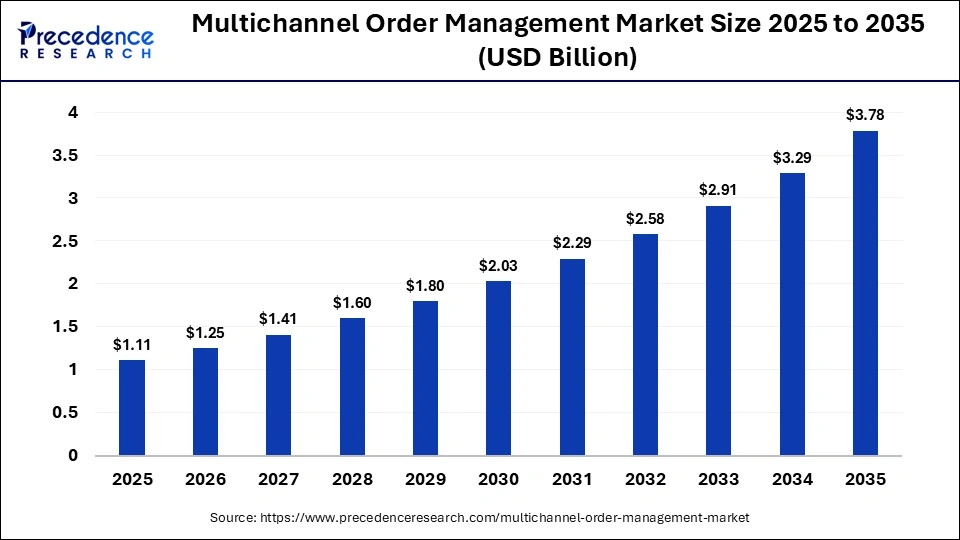
The surge in e-commerce, increasing consumer expectations for faster delivery, and the need for real-time inventory visibility are driving the adoption of advanced order management solutions. These platforms are evolving into intelligent systems that enable seamless order processing, efficient fulfillment, and enhanced customer experiences.
Read Also: SaaS Customer Relationship Management (CRM) Market
Quick Insights
The market reached USD 3.90 billion in 2025 and is expected to hit USD 13.01 billion by 2035, growing at a CAGR of 12.80%. North America dominated with around 38% share, while Asia Pacific is projected to grow at the fastest CAGR of 15.5%. Software solutions accounted for nearly 70% share, cloud deployment led with approximately 65%, large enterprises held around 65%, and retail & e-commerce contributed about 40% of total demand.
Why is Multichannel Order Management Becoming Essential for Modern Commerce?
Today’s consumers expect seamless shopping experiences across multiple platforms, including websites, mobile apps, marketplaces, and physical stores. Managing orders across these diverse channels requires centralized systems capable of real-time synchronization.
Multichannel order management systems enable businesses to integrate inventory, order processing, and fulfillment operations into a single platform. This reduces operational complexity, minimizes errors, and ensures consistent customer experiences across all touchpoints.
How is Artificial Intelligence Enhancing Order Management Systems?
Artificial intelligence is revolutionizing multichannel order management by enabling smarter decision-making and automation. AI-driven platforms analyze real-time data to optimize order routing, select the most efficient fulfillment centers, and reduce delivery times.
Additionally, AI-powered demand forecasting helps businesses anticipate customer needs, optimize inventory levels, and reduce stockouts. Automation of repetitive tasks such as order entry and invoicing further improves efficiency and accuracy.
What are the Key Growth Drivers of the Market?
The rapid growth of e-commerce and omnichannel retail strategies is a primary driver of market expansion. Businesses are increasingly adopting integrated solutions to manage complex supply chains and improve customer satisfaction.
Another key driver is the adoption of cloud-based platforms, which offer scalability, flexibility, and cost efficiency. These solutions enable organizations to manage operations in real time and adapt quickly to changing market conditions.
What Trends and Opportunities are Shaping the Market?
Is AI-Powered Demand Forecasting Transforming Inventory Management?
Yes, predictive analytics is helping businesses optimize inventory levels, reduce waste, and improve order fulfillment accuracy.
Are Cloud-Based Platforms Accelerating Adoption?
Absolutely. Cloud solutions dominate the market due to their scalability, ease of deployment, and ability to integrate with various enterprise systems.
Is Automation Driving Operational Efficiency?
Yes, automation technologies are streamlining warehouse operations, reducing manual errors, and improving overall productivity.
Regional Analysis
North America dominated the market in 2025, driven by advanced e-commerce infrastructure, high adoption of digital technologies, and strong presence of leading solution providers.
Asia Pacific is expected to witness the fastest growth, supported by rapid digitalization, expanding online retail ecosystems, and increasing adoption of cloud-based solutions in countries such as India and China.
Europe also holds a significant share, driven by the growing adoption of omnichannel retail strategies and digital transformation initiatives.
Segmental Analysis
By Component
| Component | Market Position |
|---|---|
| Software | Dominant |
| Services | Growing |
By Deployment
| Deployment | Market Trend |
|---|---|
| Cloud-Based | Leading |
| On-Premise | Stable |
| Hybrid | Growing |
By Organization Size
| Organization | Market Position |
|---|---|
| Large Enterprises | Dominant |
| SMEs | Fastest Growing |
By Industry Vertical
| Industry | Market Trend |
|---|---|
| Retail & E-commerce | Dominant |
| Consumer Goods | Strong |
| Healthcare | Growing |
| Manufacturing | Moderate |
| Automotive | Stable |
Competitive Landscape and Key Companies
The market is highly competitive, with leading players focusing on innovation, AI integration, and cloud-based solutions. Key companies include:
- IBM Corporation
- Oracle Corporation
- Salesforce, Inc.
- SAP SE
- Manhattan Associates
- HCL Technologies
- Zoho Corporation
- Brightpearl
These companies are investing in AI-powered analytics, real-time inventory management, and automation technologies to enhance operational efficiency and customer satisfaction.
What Challenges Could Impact Market Growth?
Are Integration Complexities a Barrier?
Yes, integrating order management systems with existing ERP and supply chain platforms can be complex and resource-intensive.
Are High Implementation Costs Limiting Adoption?
Initial deployment and maintenance costs may pose challenges, especially for small and medium enterprises.
Case Study: Omnichannel Retail Transformation
Retailers implementing multichannel order management systems have significantly improved inventory accuracy and delivery efficiency. By integrating online and offline channels, businesses have enhanced customer satisfaction and optimized supply chain operations.
Conclusion
The multichannel order management market is becoming a cornerstone of modern commerce. With advancements in AI, cloud computing, and automation, businesses are transforming their supply chain operations and delivering seamless customer experiences. The market is poised for strong growth through 2035 as digital commerce continues to expand globally.
Get Sample Link: https://www.precedenceresearch.com/sample/8349
For inquiries regarding discounts, bulk purchases, or customization requests, please contact us at sales@precedenceresearch.com
