
 by
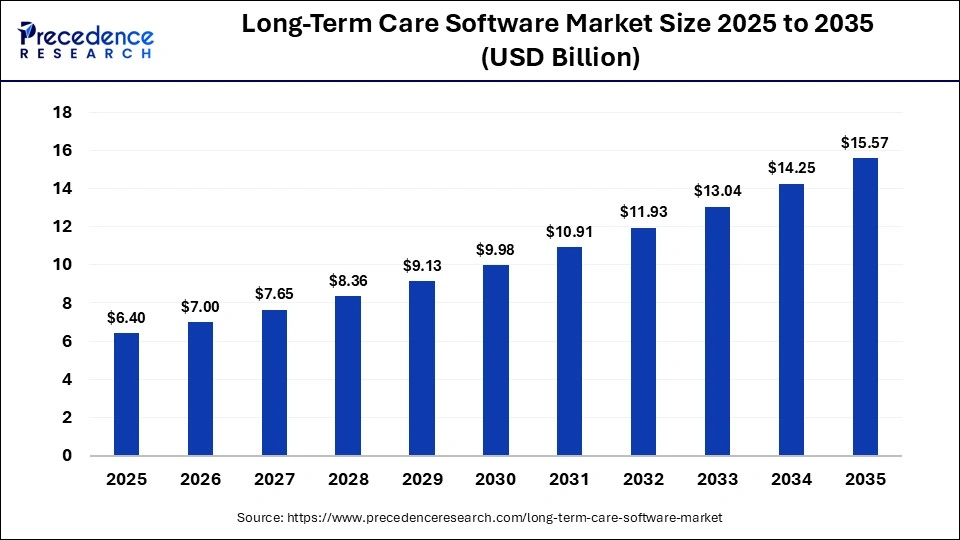
by The global long-term care software market is experiencing steady growth as healthcare systems worldwide adapt to the rising demand for elderly care, chronic disease management, and value-based healthcare delivery. The market was valued at USD 6.40 billion in 2025 and is projected to grow from USD 7.00 billion in 2026 to USD 15.57 billion by 2035, expanding at a CAGR of 9.30% during the forecast period.
The increasing global geriatric population, combined with the growing adoption of healthcare IT solutions, is significantly driving market expansion. Long-term care software is enabling healthcare providers to streamline operations, enhance patient outcomes, and improve care coordination across facilities.
Read Also: Multichannel Order Management Market
Quick Insights
The market reached USD 6.40 billion in 2025 and is expected to hit USD 15.57 billion by 2035, growing at a CAGR of 9.30%. North America dominated with around 40% share, while Asia Pacific is projected to grow at the fastest CAGR of 12.5%. Electronic health records accounted for nearly 30% share, cloud-based deployment led with approximately 65%, nursing homes held around 35%, and patient monitoring & documentation emerged as the leading application segment with about 30%.
Why is Long-Term Care Software Becoming Essential for Modern Healthcare?
Healthcare providers are increasingly facing pressure to deliver efficient, patient-centric care while managing regulatory requirements and operational costs. Long-term care software provides an integrated platform for managing patient records, coordinating care plans, and ensuring compliance with healthcare standards.
These solutions reduce administrative burden, improve workflow efficiency, and enable better communication among caregivers. As healthcare systems move toward digitization, long-term care software is becoming a critical component of modern care delivery.
How is Artificial Intelligence Transforming Long-Term Care Solutions?
Artificial intelligence is reshaping long-term care by enabling predictive analytics and personalized treatment plans. AI-powered systems can analyze patient data to detect early warning signs, predict disease progression, and support proactive care strategies.
Additionally, AI is automating administrative tasks such as scheduling, billing, and documentation. This allows healthcare professionals to focus more on patient care, improving both efficiency and patient satisfaction.
What are the Key Growth Drivers of the Market?
The rising elderly population is a major driver, as aging individuals require continuous monitoring and long-term care services. The increasing prevalence of chronic diseases further amplifies the demand for advanced care solutions.
Another key driver is the rapid adoption of digital healthcare technologies. Governments and healthcare organizations are investing heavily in IT infrastructure, accelerating the deployment of long-term care software across facilities.
What Trends and Opportunities are Shaping the Market?
Is Remote Patient Monitoring Transforming Long-Term Care?
Yes, remote monitoring technologies enable real-time tracking of patient health, reducing hospital visits and improving care outcomes.
Are Cloud-Based Platforms Driving Adoption?
Absolutely. Cloud-based solutions offer scalability, flexibility, and cost efficiency, making them highly attractive for healthcare providers.
Is Interoperability Becoming a Key Focus?
Yes, seamless integration with electronic health records and other systems is essential for improving data sharing and care coordination.
Expert Perspective
A Principal Consultant at Precedence Research states:
“Long-term care software is becoming a cornerstone of digital healthcare transformation. The integration of AI and cloud technologies will redefine how care is delivered, making it more efficient, personalized, and scalable.”
Regional Analysis
North America dominated the market in 2025, driven by advanced healthcare infrastructure, strong adoption of digital technologies, and supportive regulatory frameworks.
Asia Pacific is expected to grow at the fastest rate, supported by increasing healthcare investments, rapid digitalization, and rising demand for elderly care in countries such as India and China.
Europe also holds a significant share, with growing focus on improving healthcare systems and expanding long-term care services.
Segmental Analysis
By Software Type
| Software Type | Market Position |
|---|---|
| Electronic Health Records (EHR) | Dominant |
| Billing & Revenue Cycle Management | Stable |
| Resident Care & Clinical Management | Fastest Growing |
| Workforce Management | Growing |
| Medication Management | Moderate |
By Deployment Mode
| Deployment | Market Trend |
|---|---|
| Cloud-Based | Leading |
| On-Premise | Declining |
| Hybrid | Growing |
By Facility Type
| Facility Type | Market Position |
|---|---|
| Nursing Homes | Dominant |
| Assisted Living Facilities | Growing |
| Home Healthcare | Fastest Growing |
| Hospice & Palliative Care | Stable |
| Rehabilitation Centers | Moderate |
By Application
| Application | Market Trend |
|---|---|
| Patient Monitoring & Documentation | Dominant |
| Care Coordination & Workflow Automation | Fastest Growing |
| Regulatory Compliance | Stable |
| Financial Management | Growing |
| Staff Scheduling | Moderate |
Competitive Landscape and Key Companies
The long-term care software market is highly competitive, with major players focusing on innovation and digital transformation. Key companies include:
- PointClickCare
- MatrixCare
- Netsmart Technologies
- Cerner Corporation
- McKesson Corporation
- Epic Systems Corporation
- Allscripts Healthcare Solutions
- ResMed Inc.
These companies are investing in AI-driven analytics, cloud-based platforms, and integrated care solutions to strengthen their market positions.
What Challenges Could Impact Market Growth?
Are High Implementation Costs a Barrier?
Yes, deploying and maintaining long-term care software can be costly, especially for smaller healthcare providers.
Are Data Privacy and Compliance Concerns Significant?
Ensuring patient data security and complying with regulatory requirements remain critical challenges in the market.
Case Study: Digital Transformation in Elderly Care
Healthcare providers adopting long-term care software have improved patient outcomes through enhanced care coordination, real-time monitoring, and efficient data management. These systems enable personalized care plans and reduce administrative burdens.
Conclusion
The long-term care software market is emerging as a vital component of modern healthcare systems. With increasing demand for elderly care and rapid technological advancements, the market is expected to witness steady growth through 2035, enabling more efficient and patient-centric care delivery.
Get Sample Copy: https://www.precedenceresearch.com/sample/8350
For inquiries regarding discounts, bulk purchases, or customization requests, please contact us at sales@precedenceresearch.com
