
 by
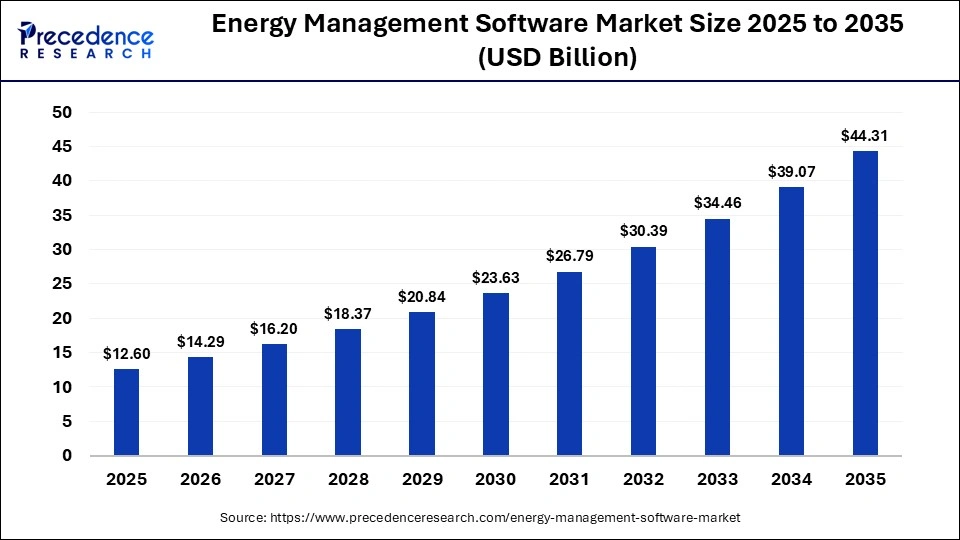
by The global energy management software market is witnessing robust expansion as organizations increasingly focus on energy efficiency, sustainability, and digital transformation. The market size was valued at USD 12.60 billion in 2025 and is projected to grow from USD 14.29 billion in 2026 to USD 44.31 billion by 2035, registering a CAGR of 13.40% during the forecast period.
The rapid digitalization of energy infrastructure, combined with stringent environmental regulations and the integration of AI-driven optimization technologies, is accelerating market growth. Enterprises are adopting energy management platforms to monitor real-time energy usage, reduce operational costs, and achieve carbon reduction targets.
Read Also: Long-Term Care Software Market
Quick Insights
The energy management software market generated USD 12.60 billion in 2025 and is expected to reach USD 44.31 billion by 2035, growing at a CAGR of 13.40%. North America dominated with around 35% share, while Asia Pacific is expected to grow at the fastest CAGR of 16.5%. Energy monitoring & analytics software led with 30% share, cloud deployment accounted for 60%, industrial & manufacturing contributed 30%, and energy consumption optimization held the largest application share at 35%.
Why is Energy Management Software Becoming a Strategic Priority for Enterprises?
Organizations are under increasing pressure to reduce energy consumption while maintaining operational efficiency. Energy management software provides a centralized system that enables businesses to track, analyze, and optimize energy usage across operations.
With rising energy costs and regulatory mandates, companies are adopting these solutions to enhance efficiency, reduce carbon emissions, and ensure compliance with sustainability standards. The ability to integrate IoT, cloud, and AI technologies makes these platforms essential for modern energy ecosystems.
How is Artificial Intelligence Transforming Energy Management Systems?
Artificial intelligence is revolutionizing energy management by enabling predictive analytics and real-time optimization. AI-powered systems analyze historical and real-time data to forecast energy demand, reduce peak loads, and improve operational planning.
Additionally, AI-driven platforms automate energy optimization by dynamically adjusting consumption patterns based on real-time inputs. This reduces energy waste, enhances system performance, and supports proactive decision-making across industries.
What are the Key Growth Drivers of the Market?
The increasing demand for energy efficiency is a major driver of market growth. Organizations are adopting digital solutions to optimize energy usage and reduce operational costs.
Another key driver is the global push toward sustainability and decarbonization. Governments and regulatory bodies are enforcing strict emissions standards, encouraging enterprises to implement energy management systems for compliance and reporting.
What Trends and Opportunities are Shaping the Market?
Is Digitalization of Energy Infrastructure Driving Adoption?
Yes, the rapid transformation of power systems into digital networks is increasing the adoption of intelligent energy management platforms across industries.
Are ESG and Carbon Tracking Creating New Opportunities?
Absolutely. The growing need for carbon footprint tracking and sustainability reporting is driving demand for advanced energy management solutions.
Is AI-Driven Automation Transforming Energy Systems?
Yes, AI-enabled systems are automating energy optimization processes, improving efficiency, and enabling real-time decision-making without human intervention.
Expert Perspective
A Principal Consultant at Precedence Research states:
“Energy management software is becoming a critical enabler of sustainable transformation. Organizations leveraging AI and real-time analytics will achieve significant cost savings while meeting global decarbonization goals.”
Regional Analysis
North America dominated the market in 2025, supported by advanced digital infrastructure, strong investments in smart grid technologies, and high adoption of energy optimization solutions.
Asia Pacific is expected to grow at the fastest rate, driven by rapid industrialization, urbanization, and increasing investments in smart city initiatives and energy infrastructure.
Europe holds a significant share, fueled by stringent carbon neutrality regulations and strong focus on sustainability initiatives across industries.
Segmental Analysis
By Software Type
| Software Type | 2025 Share | Growth Trend |
|---|---|---|
| Energy Monitoring & Analytics | 30% | Dominant |
| Carbon & Sustainability Management | 20% | Fastest Growing |
| Utility Bill Management | 15% | Stable |
| Demand Response Management | 15% | Growing |
| DER Management | 20% | Strong Growth |
Energy monitoring & analytics dominates due to its role in providing real-time visibility into energy consumption and operational efficiency.
By Deployment Mode
| Deployment | 2025 Share | Growth Trend |
|---|---|---|
| Cloud-Based | 60% | Leading |
| On-Premise | 25% | Stable |
| Hybrid | 15% | Growing |
Cloud-based solutions lead due to scalability, flexibility, and integration with AI-powered analytics systems.
By End-Use Industry
| Industry | 2025 Share | Growth Trend |
|---|---|---|
| Industrial & Manufacturing | 30% | Dominant |
| Commercial Buildings | 20% | Strong |
| Energy & Utilities | 20% | Growing |
| Residential | 10% | Fastest Growing |
| IT & Data Centers | 10% | Emerging |
Industrial & manufacturing leads due to high energy consumption and strong focus on cost optimization and efficiency improvements.
By Application
| Application | 2025 Share | Growth Trend |
|---|---|---|
| Energy Consumption Optimization | 35% | Dominant |
| Carbon Tracking & Reporting | 20% | Fastest Growing |
| Predictive Maintenance | 15% | Growing |
| Cost Optimization & Billing | 15% | Stable |
| Grid & Load Management | 15% | Moderate |
Energy consumption optimization dominates as organizations prioritize cost reduction and operational efficiency.
Competitive Landscape and Key Companies
The energy management software market is highly competitive, with leading players focusing on AI integration, smart grid technologies, and cloud-based solutions. Key companies include:
- Schneider Electric
- Siemens AG
- Honeywell International Inc.
- IBM Corporation
- Oracle Corporation
- Johnson Controls
- ABB Ltd.
- General Electric
These companies are investing in AI-powered energy analytics, cloud-native platforms, and sustainability-focused innovations to strengthen their market positions.
What Challenges Could Impact Market Growth?
Are High Implementation Costs Limiting Adoption?
Yes, the deployment of advanced energy management systems requires significant investment, particularly for small and medium enterprises.
Is Integration with Legacy Systems a Challenge?
Integrating modern energy management platforms with existing infrastructure can be complex and resource-intensive.
Case Study: Smart Energy Optimization in Industrial Facilities
Industrial enterprises implementing AI-driven energy management software have achieved significant reductions in energy consumption and operational costs. By leveraging predictive analytics and real-time monitoring, these organizations have improved efficiency and reduced their environmental footprint.
Conclusion
The energy management software market is emerging as a critical component of global digital and sustainability strategies. With the integration of AI, IoT, and cloud technologies, the market is poised for strong growth through 2035, enabling organizations to optimize energy usage, reduce costs, and achieve environmental goals.
Get Sample Copy: https://www.precedenceresearch.com/sample/8351
For inquiries regarding discounts, bulk purchases, or customization requests, please contact us at sales@precedenceresearch.com
