
 by
by The neuroinflammation market is witnessing significant growth due to the rising prevalence of neurological disorders, increasing research in neurodegenerative diseases, and advancements in targeted therapeutics. The integration of AI-driven diagnostics and precision medicine is further accelerating market expansion globally.
What is the Neuroinflammation Market Size in 2026?
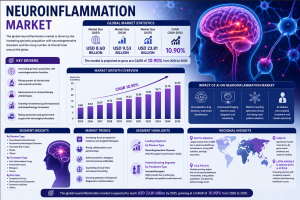
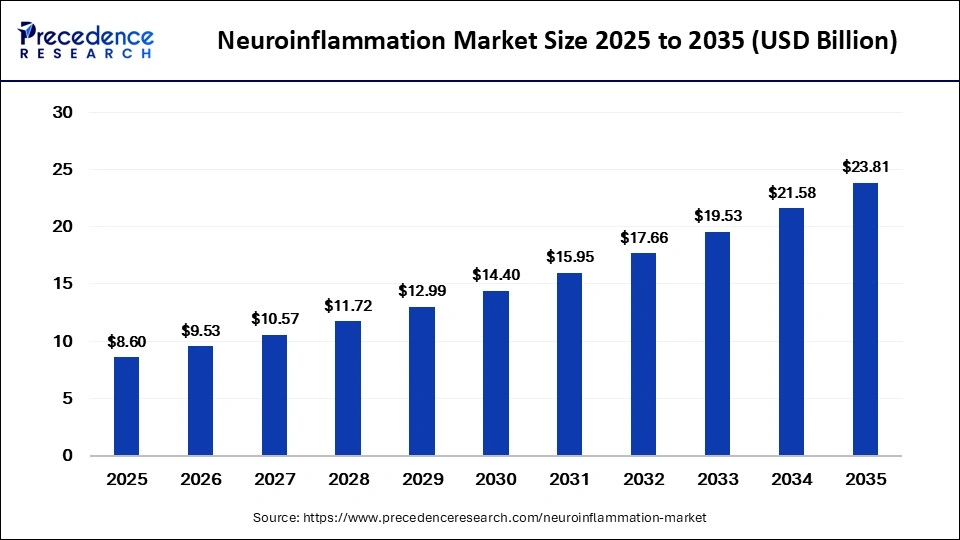
The global neuroinflammation market size accounted for USD 8.60 billion in 2025 and is predicted to increase from USD 9.53 billion in 2026 to approximately USD 23.81 billion by 2035, expanding at a CAGR of 10.90% from 2026 to 2035. The increasing geriatric population with neurodegenerative disorders and the rising number of clinical trials around the globe are key drivers of the growth of the market.
Market Highlights
- North America led the neuroinflammation market in 2025 with 40% share.
- Asia-Pacific is expected to be the fastest-growing region with a CAGR of 14.8% in the forecast period.
- By therapy type, the anti-inflammatory drugs segment led the market with 32% share in 2025.
- By therapy type, the cell and gene therapies segment is expected to be the fastest growing with a CAGR of about 20.8% in the predictive window.
- By indication, the Alzheimer’s disease segment led the global market with a share of 28% in 2025.
- By indication, the autism spectrum disorders segment is expected to be the fastest-growing with a CAGR of 15% in the foreseeable period.
- By mechanism of action, the microglial modulation segment led the global neuroinflammation market with a share of 30% in 2025 and is expected to grow at the fastest CAGR of 14.5% in the fiscal period.
- By route of administration, the oral segment led the global market with a share of 42% in 2025.
- By route of administration, the intrathecal segment is expected to grow at the highest CAGR of 16.2% in the fiscal period.
- By end-use, the hospitals segment led the global market with a share of 38% in 2025.
- By end-use, the pharmaceutical and biotechnology companies segment is expected to be the fastest-growing with a CAGR of 16.8% in the fiscal period.
Market Overview
The neuroinflammation market is expanding rapidly as healthcare providers and pharmaceutical companies focus on developing innovative therapies for neurological and autoimmune conditions. Neuroinflammation is associated with disorders such as Alzheimer’s disease, Parkinson’s disease, multiple sclerosis, traumatic brain injury, and stroke. Growing awareness regarding the role of inflammation in brain-related diseases is driving research investments and clinical developments.
Increasing demand for early diagnosis, advancements in biomarker technologies, and the emergence of personalized medicine are supporting the market’s long-term growth. Biotechnology companies and research institutions are actively exploring novel anti-inflammatory therapies and immunomodulatory treatments to improve patient outcomes.
Market Trends
The neuroinflammation market is experiencing several transformative trends that are reshaping the industry landscape. One of the major trends is the increasing focus on precision medicine and biomarker-based therapies. Researchers are developing targeted treatment approaches that address specific inflammatory pathways in neurological disorders.
Another key trend is the rising number of strategic collaborations between pharmaceutical companies, academic institutions, and biotechnology firms to accelerate drug discovery and clinical trials. The growing adoption of advanced imaging technologies and molecular diagnostics is also improving the detection and monitoring of neuroinflammatory conditions.
Additionally, there is increasing investment in biologics, monoclonal antibodies, and regenerative medicine therapies aimed at reducing inflammation in the central nervous system. The expansion of clinical research activities and government funding for neurological disease research continue to support market growth.
AI Impact on the Neuroinflammation Market
Artificial intelligence is playing a transformative role in the neuroinflammation market by improving diagnostic accuracy, accelerating drug discovery, and enabling personalized treatment strategies. AI-powered algorithms can analyze large volumes of neurological imaging data and identify inflammation-related abnormalities with higher precision.
Machine learning models are also helping researchers discover new therapeutic targets and predict patient responses to treatment. AI-driven platforms support faster clinical trial optimization, reducing the time and cost associated with developing neuroinflammation therapies.
Furthermore, AI integration in healthcare systems is enhancing patient monitoring, disease progression analysis, and predictive analytics for neurological disorders. The growing use of AI in neuroscience research is expected to create significant opportunities for innovation and market expansion.
Segment Insights
By Disease Type
Neurodegenerative diseases account for a significant share of the neuroinflammation market due to the increasing prevalence of Alzheimer’s disease, Parkinson’s disease, and multiple sclerosis worldwide. Traumatic brain injuries and autoimmune neurological disorders are also contributing to market demand.
By Treatment Type
Biologics and anti-inflammatory drugs are gaining strong traction due to their effectiveness in targeting inflammatory pathways. Immunotherapies and regenerative medicine approaches are also emerging as promising treatment segments.
By End User
Hospitals, research institutes, specialty clinics, and pharmaceutical companies represent major end users in the neuroinflammation market. Research organizations are increasingly investing in advanced neuroscience studies and clinical trials.
Regional Insights
North America dominates the neuroinflammation market due to advanced healthcare infrastructure, strong biotechnology presence, and increasing investments in neurological research. The region benefits from extensive clinical trial activities and early adoption of advanced therapies.
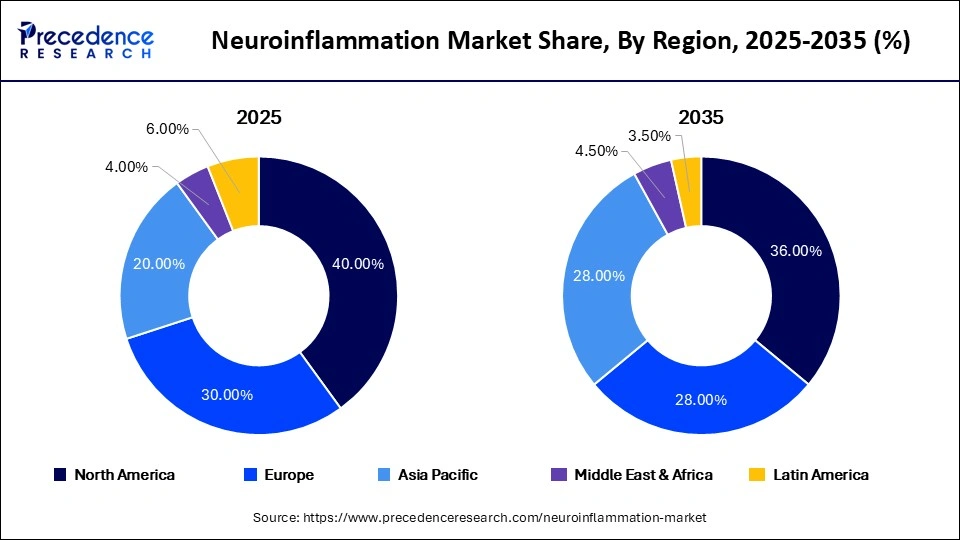
Europe is witnessing steady growth driven by rising awareness regarding neurodegenerative diseases and government support for neuroscience research. Increasing collaborations between research institutions and pharmaceutical companies are further supporting market development.
Asia Pacific is expected to experience rapid growth due to expanding healthcare infrastructure, growing patient populations, and rising investments in biotechnology and pharmaceutical industries. Increasing healthcare expenditure and awareness about neurological disorders are boosting regional demand.
These regions are gradually gaining traction due to improving healthcare access, growing research activities, and increasing focus on neurological disease management. Expanding healthcare investments are expected to support future market growth.
Top Companies in the Neuroinflammation Market
- F. Hoffmann-La Roche Ltd.
- Novartis AG
- Biogen Inc.
- Pfizer Inc.
- Eli Lilly and Company
- AbbVie Inc.
- Sanofi S.A.
- Johnson & Johnson
- Merck & Co., Inc.
- Bristol Myers Squibb
- UCB Pharma
- Teva Pharmaceutical Industries
- AC Immune SA
- Annovis Bio
- Alector Inc.
- Shape
Recent Developments
- In February 2026, a study identified Orai1 channels as regulators of microglial cell state transitions, linking Ca2+ signalling to neuroinflammation and inflammation-driven behavioural dysfunction. Orai1 calcium channels regulate microglial reactivity and neuroinflammation-driven changes in motivational behaviours.
- In January 2026, Eli Lilly and Company and Ventyx Biosciences, Inc. announced a definitive agreement under which Lilly will acquire Ventyx. Ventyx is developing a pipeline of small-molecule therapeutics, including NLRP3 inhibitors, designed to treat inflammation across a broad range of disease states with high unmet need.
Segments Covered in the Report
By Therapy Type
- Anti-inflammatory Drugs
- NSAIDs
- Corticosteroids
- Cytokine Inhibitors
- Monoclonal Antibodies
- Small Molecule Therapies
- Cell & Gene Therapies
- Immunomodulators
By Indication
- Alzheimer’s Disease
- Parkinson’s Disease
- Multiple Sclerosis
- Amyotrophic Lateral Sclerosis (ALS)
- Traumatic Brain Injury (TBI)
- Stroke
- Autism Spectrum Disorders
- Other Neurodegenerative Disorders
By Mechanism of Action
- Microglial Modulation
- Cytokine Suppression
- Oxidative Stress Reduction
- Blood-Brain Barrier Protection
- Neuroprotection Enhancement
By Route of Administration
- Oral
- Intravenous (IV)
- Subcutaneous
- Intrathecal
By End-use
- Hospitals
- Specialty Neurology Clinics
- Academic & Research Institutes
- Pharmaceutical & Biotechnology Companies
By Region
- North America
- Latin America
- Europe
- Asia-pacific
- Middle and East Africa
Get Sample Link : https://www.precedenceresearch.com/sample/8435
Also Read Our Latest Article : Aluminum Die Casting Market
