
 by
by The global fantasy sports market is entering a high-growth phase as mobile gaming ecosystems, AI-powered analytics, real-time sports engagement, and digital payment infrastructure continue transforming the global sports entertainment landscape. The increasing popularity of fantasy football, cricket, esports, and basketball leagues is driving strong user participation across both developed and emerging economies.
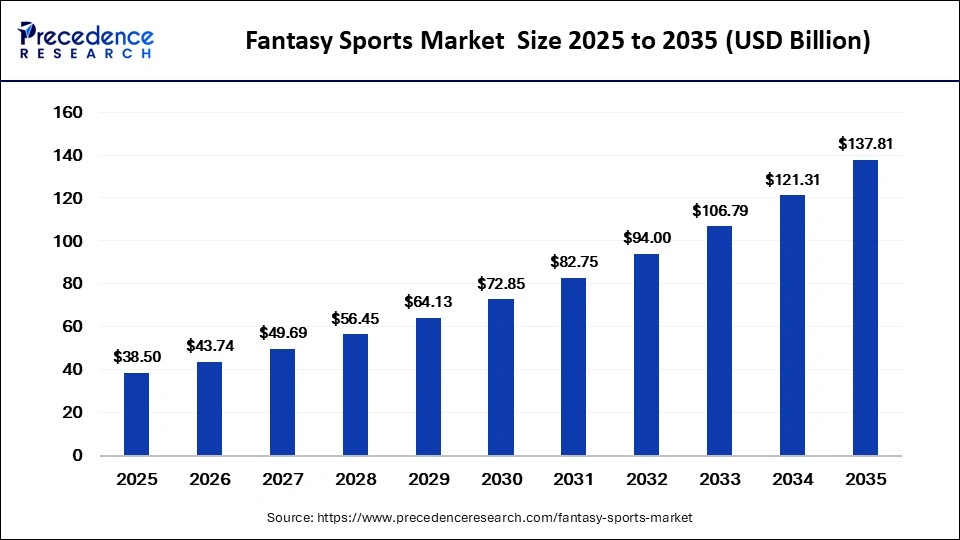
According to Precedence Research, the global fantasy sports market size accounted for USD 38.50 billion in 2025 and is projected to increase from USD 43.74 billion in 2026 to approximately USD 137.81 billion by 2035, expanding at a CAGR of 13.60% from 2026 to 2035. The market growth is fueled by rising mobile-first engagement, increasing monetization through fantasy gaming platforms, and rapid integration of AI-powered real-time analytics.
Quick Insights: What Are the Key Highlights of the Fantasy Sports Market?
- North America dominated the global fantasy sports market with 46% market share in 2025 due to strong adoption across NFL, NBA, MLB, and NHL fantasy ecosystems.
- Europe accounted for the second-largest market share of 20% in 2025 and is expected to witness substantial growth during the forecast period.
- The football segment contributed the highest market share of 32% in 2025 because of strong engagement across American football and European soccer leagues.
- Cricket held 28% market share in 2025 and is expected to grow at a strong CAGR of 18% through 2035 due to rising participation in India and South Asia.
- Mobile applications dominated the platform segment with 78% market share in 2025 due to smartphone-first user behavior.
- Daily fantasy sports (DFS) accounted for 64% market share in 2025 because of instant gameplay cycles and higher user engagement.
- Casual players represented 72% of total users in 2025, while professional players are projected to grow at the fastest CAGR of 17%.
- Major industry participants include DraftKings Inc., FanDuel Group, Dream11, Yahoo Fantasy Sports, ESPN Fantasy Sports, MPL (Mobile Premier League), PrizePicks, and Sleeper.
Read Also: Tau Protein Targeting Therapeutics Market
How Is Artificial Intelligence Transforming the Fantasy Sports Market?
Artificial intelligence is becoming a game-changing technology across fantasy sports platforms by improving predictive analytics, user personalization, fraud detection, and real-time engagement. AI-powered systems analyze live player performance, injury reports, historical statistics, and match conditions to deliver optimized team recommendations and gameplay insights.
Machine learning algorithms are also helping fantasy sports operators improve user retention through personalized contest recommendations, dynamic notifications, and adaptive gaming experiences. AI-enabled analytics tools are increasingly becoming premium monetization features across leading fantasy sports platforms.
Additionally, AI-driven moderation systems and fraud prevention technologies are helping operators strengthen platform integrity and improve user trust. The growing adoption of AI-powered real-time analytics is expected to remain one of the most important competitive differentiators across the fantasy sports ecosystem over the next decade.
What Are the Major Growth Factors Driving the Fantasy Sports Market?
Why Is Mobile-First Adoption Accelerating Market Growth?
The increasing penetration of smartphones and affordable internet access is significantly expanding global fantasy sports participation. Mobile applications enable users to create teams, join contests, track live scores, and participate in fantasy leagues from anywhere.
According to industry analysis, mobile applications accounted for 78% market share in 2025, highlighting the growing dominance of mobile-first fantasy gaming ecosystems.
How Is Real-Time Sports Analytics Enhancing User Engagement?
Fantasy sports users increasingly demand live statistics, AI-generated insights, and real-time gameplay experiences. Platforms integrating live sports data and predictive analytics are witnessing stronger engagement and longer user retention.
Why Is Cricket Emerging as a Major Growth Engine?
Fantasy cricket is becoming one of the fastest-growing segments globally due to the enormous popularity of cricket tournaments such as the IPL. According to the Internet and Mobile Association of India (IAMAI), more than 225 million users actively engage with fantasy cricket platforms.
How Is Esports Expanding the Fantasy Sports Ecosystem?
The rapid growth of esports tournaments and multiplayer online gaming ecosystems is creating substantial opportunities for fantasy gaming operators. Younger demographics are increasingly participating in esports fantasy leagues and AI-driven prediction contests. The esports segment is projected to grow at a CAGR of 22% through 2035.
What Opportunities Are Emerging Across the Fantasy Sports Market?
Can AI-Powered Predictive Platforms Unlock New Revenue Streams?
Yes. Fantasy sports operators are increasingly introducing premium AI-powered analytics tools and predictive engines that provide advanced lineup optimization and performance forecasting features.
Will Emerging Markets Drive Future User Growth?
Absolutely. Countries including India, Indonesia, Brazil, and African economies are witnessing rapid smartphone adoption and digital payment integration, creating enormous untapped growth potential for fantasy gaming platforms.
How Are Virtual Sports and Esports Creating New Opportunities?
Fantasy operators are increasingly launching virtual sports leagues and esports-based fantasy contests to maintain user engagement even outside traditional sports seasons. This diversification strategy is expected to strengthen long-term market scalability.
Which Regions Are Leading the Fantasy Sports Market?
Why Did North America Dominate the Global Market?
North America accounted for the largest market share in 2025 due to deeply established fantasy gaming ecosystems surrounding NFL, NBA, MLB, and NHL leagues. The region benefits from high digital adoption, strong consumer spending, and growing integration between fantasy sports and sports betting ecosystems.
U.S. Market Trends
The United States remains the dominant market globally because of strong participation across daily fantasy sports platforms and increasing adoption of AI-powered sports analytics tools.
Why Is Europe Emerging as a Strong Growth Region?
Europe held the second-largest market share of 20% in 2025 and is projected to grow significantly during the forecast period. The region benefits from football-centric fantasy ecosystems associated with the Premier League, UEFA tournaments, and domestic soccer leagues.
United Kingdom Market Trends
The UK remains a major fantasy sports market due to strong football engagement and rising adoption of mobile fantasy gaming platforms.
Why Is Asia-Pacific Becoming a High-Growth Market?
Asia-Pacific is witnessing rapid growth driven by cricket-centric fantasy gaming and rising smartphone penetration. India is emerging as one of the strongest growth engines globally due to its massive cricket fan base and expanding digital payments ecosystem.
Platforms such as Dream11, MPL (Mobile Premier League), My11Circle, and BalleBaazi are driving strong market momentum across India.
Which Segments Are Driving Revenue Growth Across the Market?
Why Did Football Dominate the Sports Type Segment?
The football segment accounted for 32% market share in 2025 due to high engagement across NFL and European football leagues. The integration of live analytics and sports betting ecosystems is further strengthening fantasy football participation.
Why Is Cricket Experiencing Rapid Growth?
Cricket held 28% market share in 2025 and is projected to grow at a CAGR of 18% through 2035 due to IPL-driven engagement cycles and strong adoption in India and South Asia.
Why Is Esports Becoming the Fastest-Growing Segment?
The esports segment is projected to witness the fastest CAGR of 22% because of increasing popularity among younger demographics and the rapid expansion of global gaming ecosystems.
Why Did Mobile Applications Dominate the Platform Segment?
Mobile applications dominated the market with 78% share in 2025 because of smartphone-first user behavior and seamless digital payment integration. Fantasy gaming operators continue prioritizing mobile optimization and real-time engagement features to strengthen user retention.
How Are Web-Based Platforms Maintaining Relevance?
Web-based platforms continue serving professional fantasy users who require advanced drafting tools, analytics dashboards, and multi-screen league management capabilities.
Why Did Daily Fantasy Sports (DFS) Lead the Market?
Daily fantasy sports accounted for 64% market share in 2025 because shorter gameplay cycles and instant monetization opportunities significantly improve user engagement. Leading DFS operators continue expanding live contests and AI-powered gameplay features globally.
What Recent Developments Are Reshaping the Fantasy Sports Industry?
AI-Powered Fantasy Analytics Are Becoming Mainstream
Fantasy sports platforms are increasingly integrating AI-driven player prediction systems, automated lineup optimization, and personalized engagement engines to strengthen platform competitiveness.
Fantasy Sports App Development Is Accelerating
Community discussions across developer ecosystems indicate strong momentum in fantasy sports platform development, particularly around AI-powered analytics, real-time APIs, and scalable cloud infrastructure.
IPL-Centric Fantasy Gaming Continues Expanding
Fantasy cricket ecosystems surrounding IPL tournaments continue witnessing strong user engagement and rapid platform expansion across India and South Asia.
What Challenges Are Limiting Market Growth?
Despite strong growth potential, the fantasy sports market faces several operational and regulatory challenges. Regulatory fragmentation across different countries and states continues creating scalability limitations for fantasy sports operators.
Intense competition among gaming platforms is also increasing customer acquisition costs and compressing average revenue per user. Additionally, concerns surrounding responsible gaming, cybersecurity, and fraud prevention remain major operational priorities for industry participants.
Case Study: How Fantasy Cricket Platforms Transformed Digital Sports Engagement in India
The rapid success of fantasy cricket platforms demonstrates how mobile-first gaming, real-time analytics, and seamless digital payments can transform sports engagement ecosystems.
Platforms such as Dream11 leveraged IPL-driven engagement cycles, AI-powered recommendations, and instant scoring systems to attract millions of users. The combination of smartphone accessibility, social competition, and live sports integration significantly boosted fantasy gaming participation across India.
Conclusion: Why Is the Fantasy Sports Market Entering a New Digital Entertainment Era?
The fantasy sports market is entering a transformative growth phase driven by AI integration, mobile gaming adoption, esports expansion, and real-time sports engagement worldwide.
As fantasy sports platforms continue enhancing predictive analytics, personalization, live engagement, and immersive gaming experiences, the industry is expected to become one of the fastest-growing segments within the global sports-tech and digital entertainment ecosystem.
Get a Sample Copy: https://www.precedenceresearch.com/sample/8425
For inquiries regarding discounts, bulk purchases, or customization requests, please contact us at [email protected]
